
Human + AI: What PANA's 5th GMM Revealed About the New Creative Equation
By Nichole Quintos, Creative Strategy Specialist
Key Takeaways from the 5th PANA GMM:
AI is accelerating creativity, not replacing it.
Supported by automating production-intensive tasks, AI allows marketers and creative teams to focus more on strategy, storytelling, and audience engagement.
Platform-first content is becoming essential.
Success on channels like TikTok requires content designed specifically for how audiences discover, consume, and interact with content on those platforms.
Human expertise remains the competitive advantage.
Cultural context, brand taste, strategic judgment, and emotional truth continue to be critical ingredients that AI cannot fully replicate.
The most effective model is collaboration.
Whether as a tool, co-creator, or workflow orchestrator, AI delivers the greatest value when combined with human creativity and decision-making.
AI readiness goes beyond technology.
Organizations must invest in experimentation, governance, upskilling, and connected systems to fully unlock the benefits of AI across the marketing ecosystem.
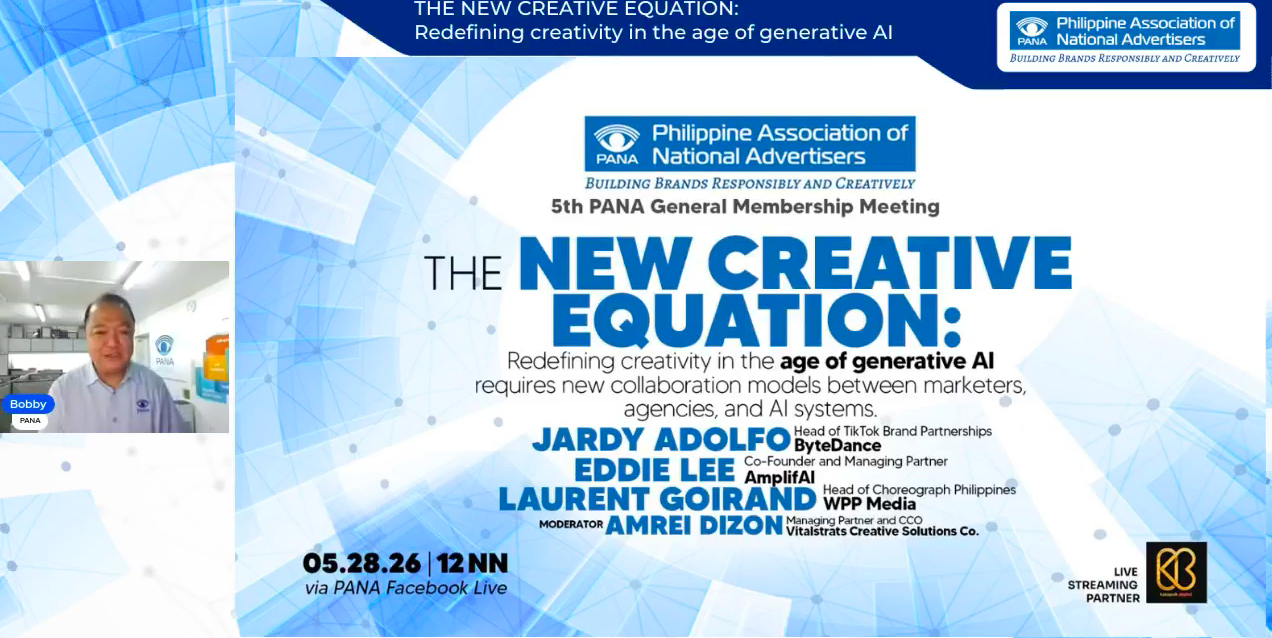
Bobby Simborio, Executive Director of the Philippine Association of National Advertisers (PANA), introducing the topic of the 5th PANA GMM
Generative AI is changing how brands create, optimize, and scale content, but the competitive advantage is increasingly determined by human judgment rather than technology alone.
At PANA's 5th General Membership Meeting last May 28, 2026, industry leaders from TikTok, AmplifAI, and WPP Media explored how organizations can combine AI-powered efficiency with human creativity, strategic thinking, and cultural understanding.
Across all three sessions, a consistent theme emerged: AI can accelerate execution, but people remain responsible for context, brand stewardship, and decision-making. The future of creativity belongs not to humans or AI alone, but to those who can effectively combine the strengths of both.
How Is Generative AI Changing Content Creation on TikTok?
The first session featured Jardy Adolfo, Head of TikTok Brand Partnerships at ByteDance, who explored how generative AI is reshaping the creative process for brands and marketers.
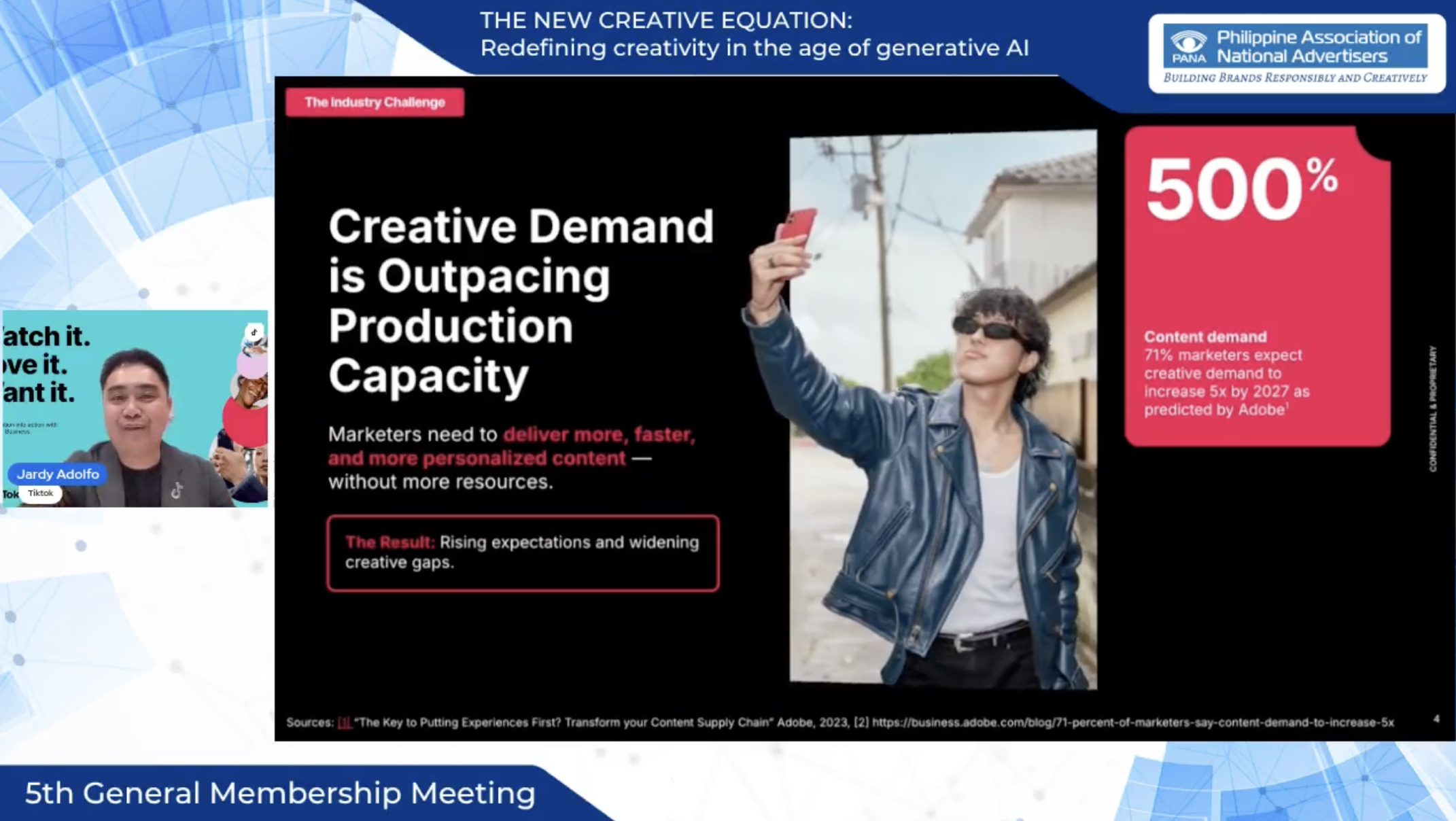
Jardy Adolfo, Head of TikTok Brand Partnerships at ByteDance, discussing the growing expectations for creative demand
According to Adolfo, creativity remains one of the strongest growth drivers on TikTok. However, success on the platform requires more than simply adapting existing content. Brands need TikTok-first creative solutions that are designed for the platform's unique culture, audience behaviors, and content formats.
As the demand for content continues to grow, AI is helping creative teams move from ideation to execution faster. Adolfo emphasized that effective content must be built not only for performance, but also for people—balancing efficiency with authenticity and relevance.
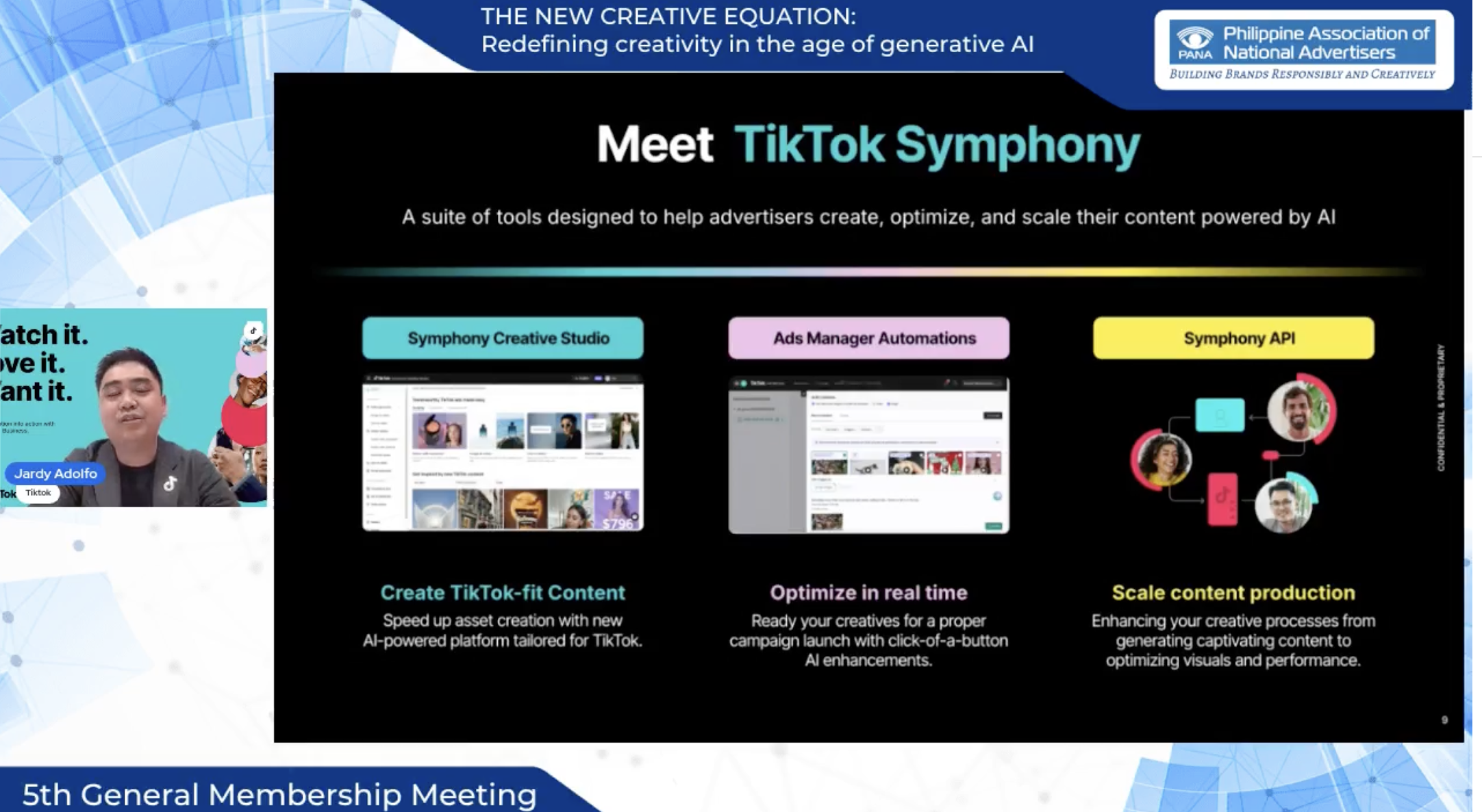
Jardy introducing TikTok Symphony and its key features to support brands and marketers for TikTok-specific content
To support this shift, TikTok introduced Symphony, its suite of AI-powered creative tools designed to streamline content development across every stage of the creative process.
For inspiration, Symphony helps marketers identify trends, discover high-performing creative formats, and access libraries of proven ideas that can be adapted for future campaigns.
For creation, it enables teams to generate a variety of content formats based on campaign requirements.
For scale and optimization, it allows brands to remix, translate, and dub content, making it easier to expand successful creative across audiences and markets.
In reducing manual production work, AI allows marketers to spend more time focusing on strategy, storytelling, and audience engagement.
What Creative Capabilities Remain Uniquely Human?
While AI continues to expand what creative teams can accomplish, the second session focused on an equally important question: what remains uniquely human?
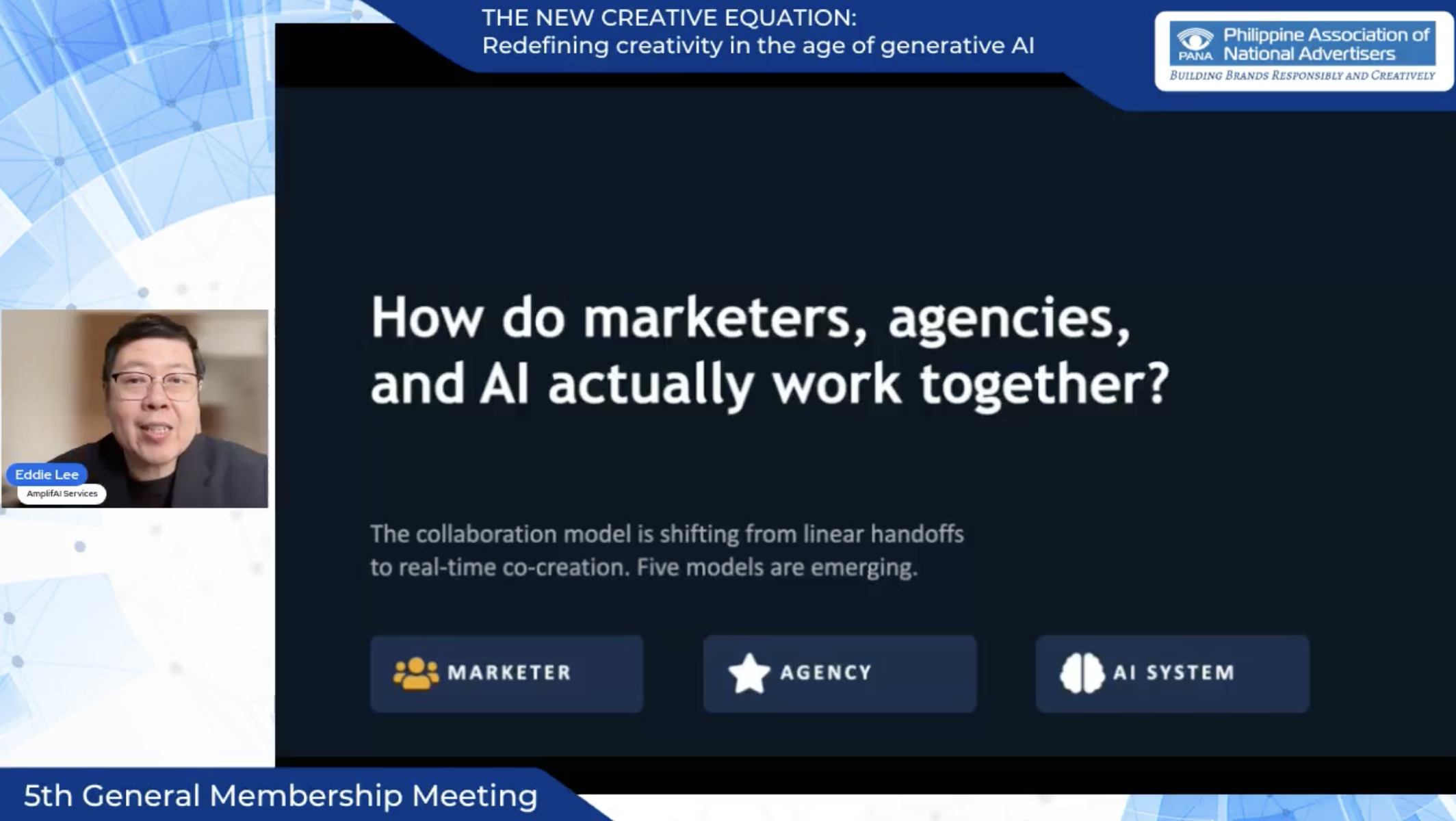
Eddie Lee, Co-Founder and Managing Partner of AmplifAI, introduces the five collaboration models with the marketer, the brand, and AI
Eddie Lee, Co-Founder and Managing Partner of AmplifAI, explored how marketers, agencies, and AI can work together through different collaboration models:
AI as an execution tool – handling production tasks and streamlining workflows.
AI as a co-creator – collaborating with creative teams to generate ideas, content, and concepts.
Marketers working directly with AI – using AI as a partner for ideation, planning, and problem-solving.
Brand–Agency–AI collaboration – a triangular model where all three contribute to the creative process.
AI as an orchestrator – managing workflows, connecting systems, and routing information across teams and functions.
This spectrum illustrates how AI's role is evolving from a supporting tool to an increasingly integrated collaborator within marketing and creative organizations.
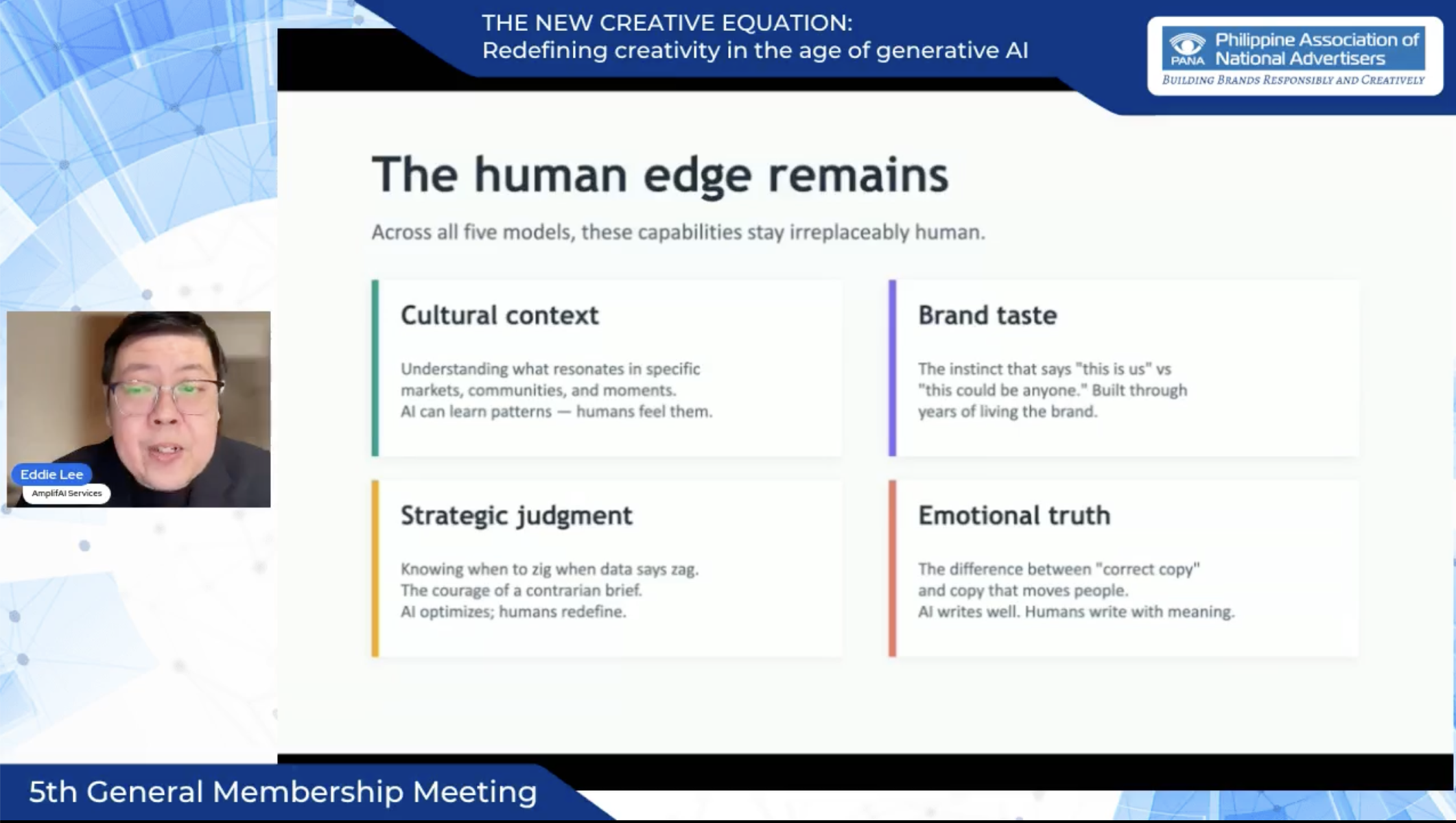
Eddie highlights the value of human insight irreplaceable to AI tools to make compelling creativity
Despite these evolving models, Lee emphasized that AI does not eliminate the need for human expertise. Instead, it increases the value of distinctly human capabilities:
Cultural context
Understanding social nuances, local behaviors, and cultural moments requires interpretation that goes beyond data and algorithms.
Brand taste
AI can generate countless options, but humans determine what aligns with a brand's identity, values, and creative standards.
Strategic judgment
Knowing which opportunities to pursue, what risks to take, and how to balance short-term results with long-term goals remains a human responsibility.
Emotional truth
The most effective campaigns connect with authentic human experiences, emotions, and motivations; something AI can support but not fully replicate.
These qualities are what transform content into meaningful brand experiences and help creative work resonate with real people. As AI becomes more capable, the differentiator is no longer access to technology, but the ability to apply human insight to guide it effectively.
How Should Organizations Integrate AI Into Marketing Operations?
The third session shifted the discussion from creative execution to organizational transformation.
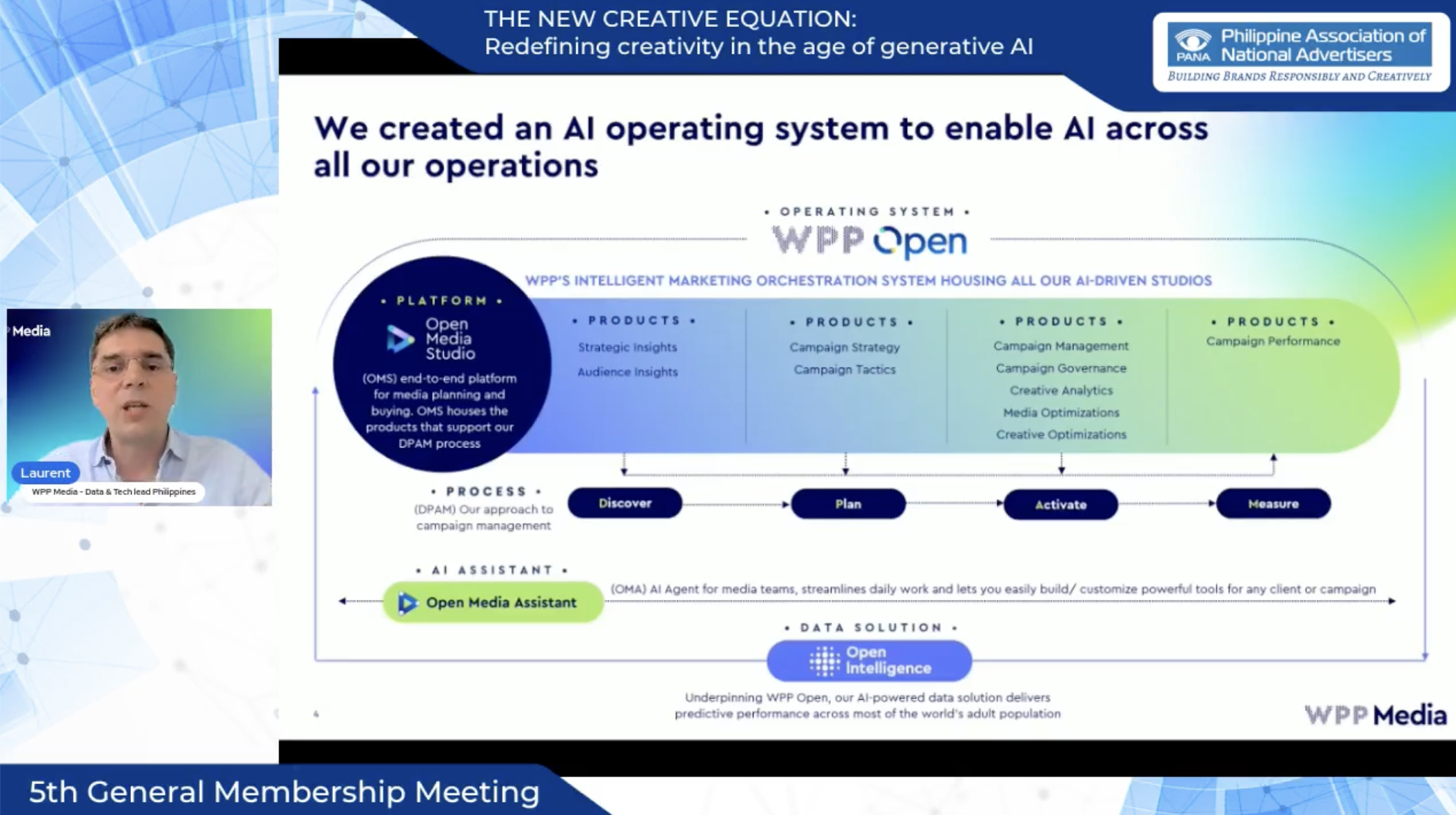
Laurent Goirand, Head of Choreograph Philippines at WPP Media, discusses how AI can now be integrated across the marketing and creative process
Laurent Goirand, Head of Choreograph Philippines at WPP Media, shared how AI's greatest value emerges when it operates as part of an interconnected marketing ecosystem rather than as a standalone tool.
Through WPP Media's Open Media Studio, AI is embedded across multiple stages of the marketing process, creating a more connected and intelligent operating environment. Rather than working in isolation, AI tools are increasingly able to share information with one another, enabling insights and outputs to move seamlessly across discovery, planning, activation, and measurement.
This connected approach creates a continuous flow of intelligence that helps teams make faster and more informed decisions throughout the marketing lifecycle.
Goirand also highlighted the growing importance of context as a competitive advantage.
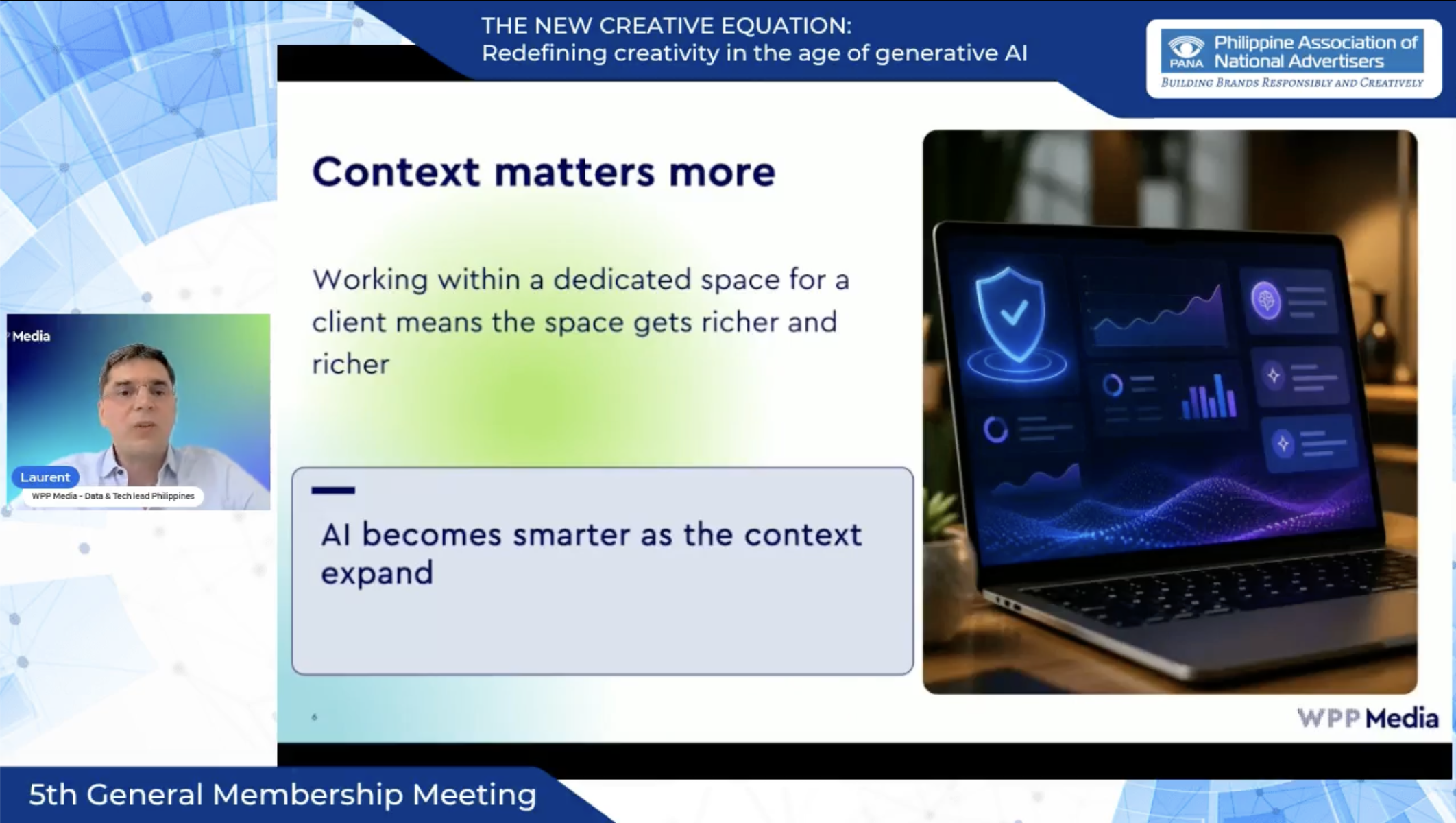
Laurent stresses the importance of context for AI to work effectively
While generative models can produce content, the quality of their outputs depends heavily on the information available to them. Organizations that centralize audience insights, campaign history, performance data, and business objectives create richer environments that help AI systems to generate more relevant recommendations and decisions.
What Practical Steps Should Organizations Take to Become AI-Ready?
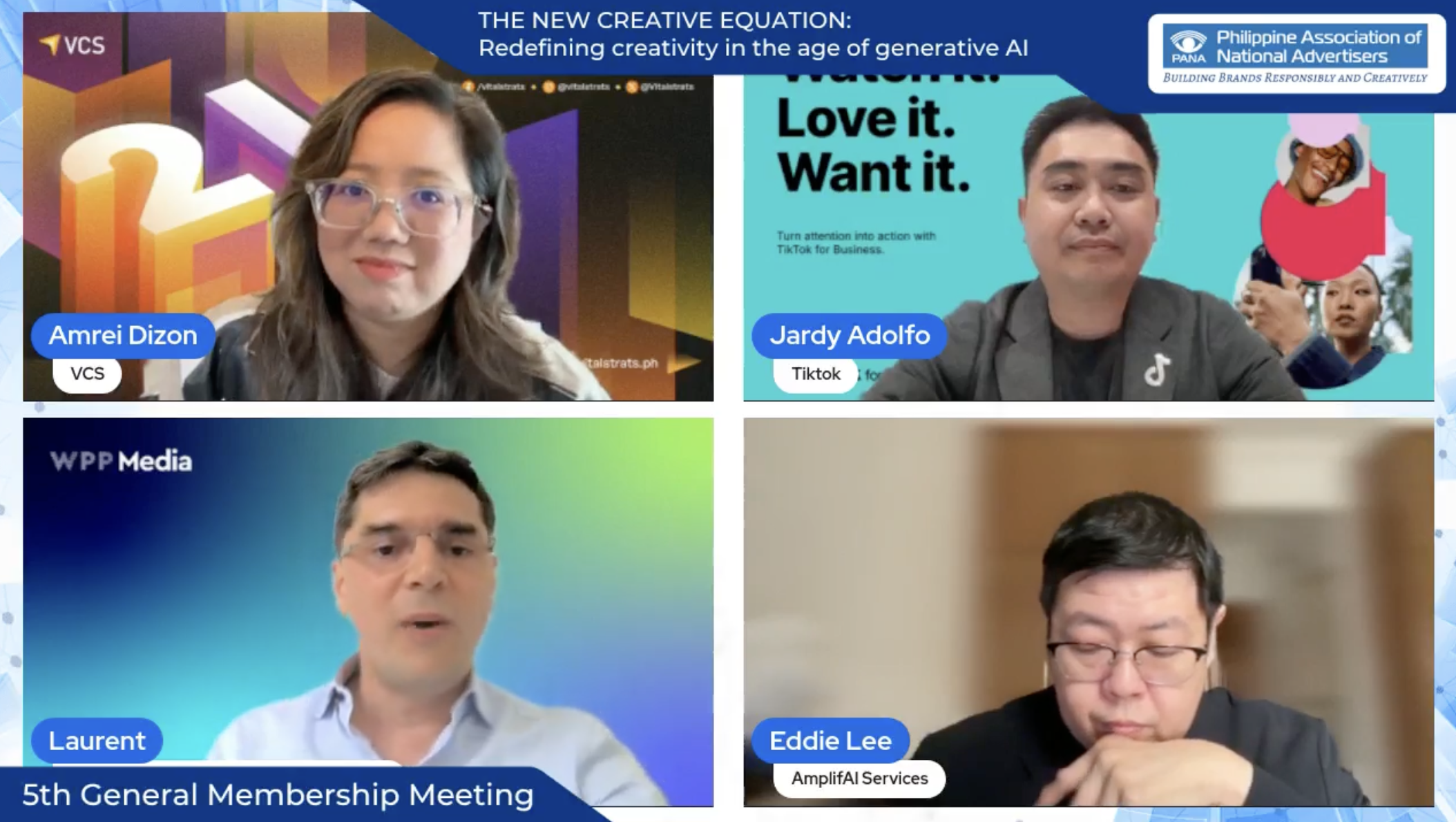
Amrei Dizon, Managing Partner and CCO of Vitalstrats Creative Solutions Co., moderates the panel discussion with the guest speakers
During the panel discussion, speakers shared several practical steps for organizations beginning their AI journey:
Create a culture that encourages experimentation and learning
Remove the stigma often associated with AI adoption
Establish clear governance and compliance frameworks
Invest in employee education and upskilling
Ensure content and digital assets are optimized for AI-driven discovery
Collectively, these actions help organizations move beyond simply adopting AI tools and toward building AI-ready teams, workflows, and capabilities.
Why the Future of Marketing Depends on Human–AI Collaboration
Throughout the discussions, one message remained consistent: AI is transforming how creative work is developed, optimized, and scaled, but human insight remains essential in shaping strategy, providing context, and creating meaningful connections with audiences.
The future of marketing will not be defined by humans or AI alone. It will belong to organizations that can successfully combine AI-powered efficiency with human creativity, judgment, and collaboration.
As the industry continues to evolve, VCS remains committed to championing Creativity That Knows the Business, a belief that embraces emerging technologies while ensuring that every creative solution remains grounded in business objectives, audience understanding, and measurable impact.
✨ Build future-ready creative systems with us: https://vitalstrats.ph/contact-us
📲 Follow our work and insights across platforms:
Facebook: facebook.com/vitalstrats
LinkedIn: linkedin.com/company/vitalstrats-creative-solutions
Instagram: instagram.com/vitalstrats
X: x.com/Vitalstrats
YOU MAY ALSO LIKE

Vitalstrats Creative Solutions (VCS) is a creative agency based in Quezon City, Philippines. VCS specializes in content marketing, advertising, and video production. We use strategic creativity to help our clients grow their brands.
Facebook: https://www.facebook.com/vitalstrats
Instagram: https://www.instagram.com/vitalstrats
Twitter: https://twitter.com/Vitalstrats
Agency Reel: http://bit.ly/VCSReel2019