
How Philippine Leaders are Navigating the Move to Autonomous AI: SaaSCon PH 2026 Insights
By Kat Torrefranca, Creative Strategy Director and Sophia Alcaraz, Digital Content and PR Specialist
TL;DR
At SaaSCon PH '26, a clear pattern emerged. Organizations generating measurable AI value are redesigning workflows around what AI can perform autonomously, rather than layering AI onto existing processes.
Across sessions, speakers consistently emphasized that AI success depends less on tool adoption and more on operating model design, governance, and organizational discipline.
For agencies and brands, competitive advantage is increasingly defined by combining AI execution with human judgment, relationships, and strategic direction.
What Were the Key Insights From SaaSCon PH ’26?
AI-native organizations redesign workflows around autonomous AI execution rather than layering tools into legacy systems.
The most successful companies are not the fastest adopters of AI. They are the most intentional in how they deploy it.
Human judgment, relationships, and creative instinct remain essential. Their application is shifting toward higher-level decision-making and oversight.
Effective AI adoption depends on continuously revisiting and updating systems, not treating implementation as a one-time setup.
AI is shifting from a support tool to an autonomous executor of work. At SaaSCon PH '26, held on May 12, 2026 at the Marriott Grand Ballroom in Pasay City, over 1,000 founders and enterprise leaders observed this pattern firsthand. Organizations generating measurable AI-driven business value are no longer layering AI onto existing workflows. They are redesigning operating models around what AI can perform independently.
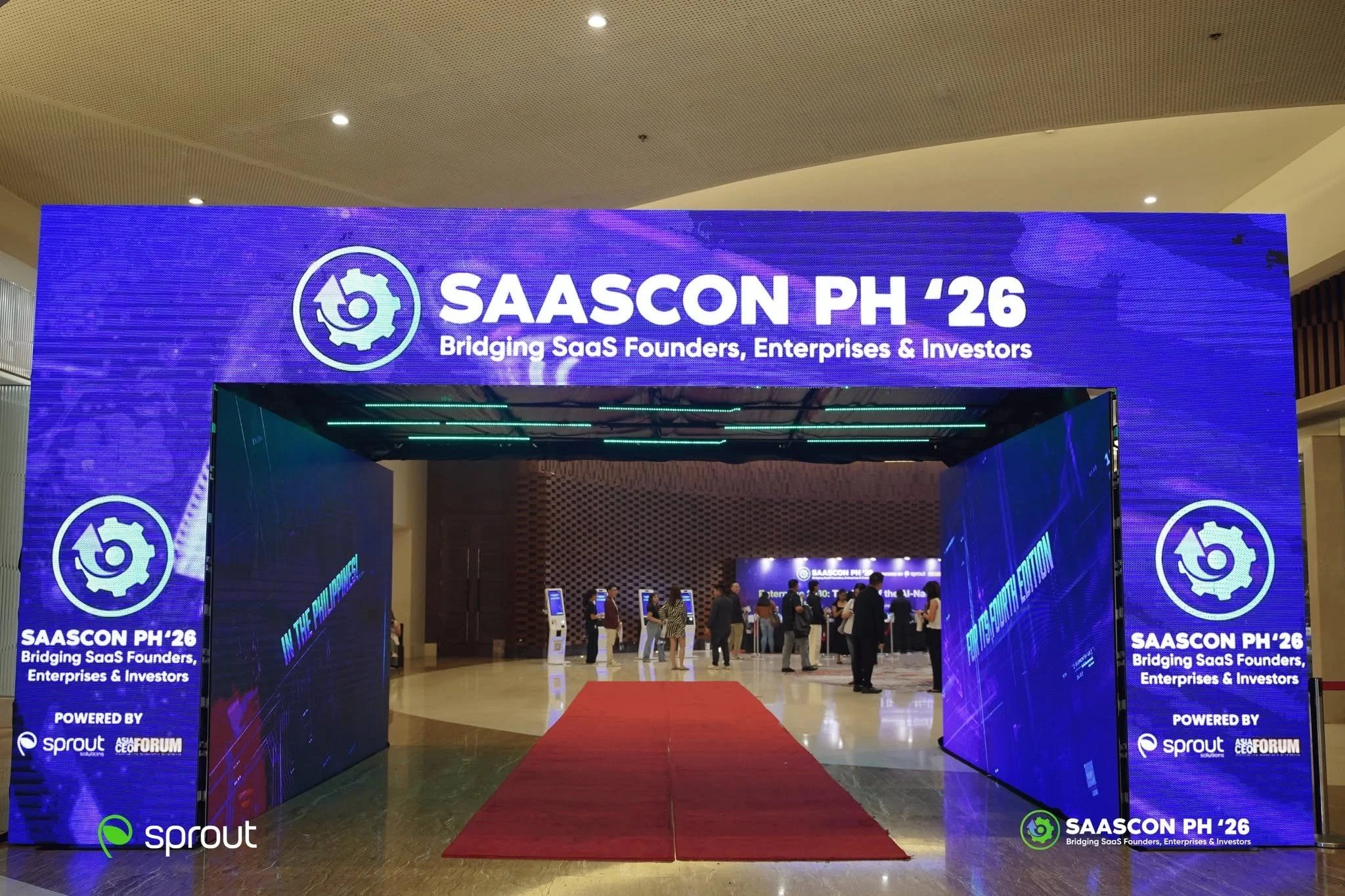
Setting the stage for the future. This year’s event centers on a pivotal shift in the corporate landscape: Enterprise 2030: The Rise of the AI-Native Business. (Photo courtesy of Sprout Solutions)
This shift is commonly described as the move from AI as assistant to AI as agent, where systems execute multi-step workflows with limited human intervention. In this model, competitive advantage is driven less by tool adoption speed and more by organizational design, governance discipline, and workflow restructuring.
Agentic AI Defined
Agentic AI refers to AI systems that can autonomously execute multi-step tasks and workflows with limited human intervention, rather than simply generating outputs in response to prompts.
The VCS team spent the day observing this tension across enterprise sessions. Creative Strategy Director Kat Torrefranca, Executive Creative Director Jan Agulto, and Multimedia Production Manager Albert Dela Cruz attended key discussions.
VCS Chief Creative Officer (CCO) and Managing Partner Amrei Dizon represented the agency as a panelist on the Track 3 SME session, "What No One Tells You About AI for SMEs: A Peer-Curated Exchange," moderated by RJ Ledesma, alongside fellow panelists Doc Ligot, Rio Ilao, and Joey Gurango of the Philippine AI Business Association (PAIBA).
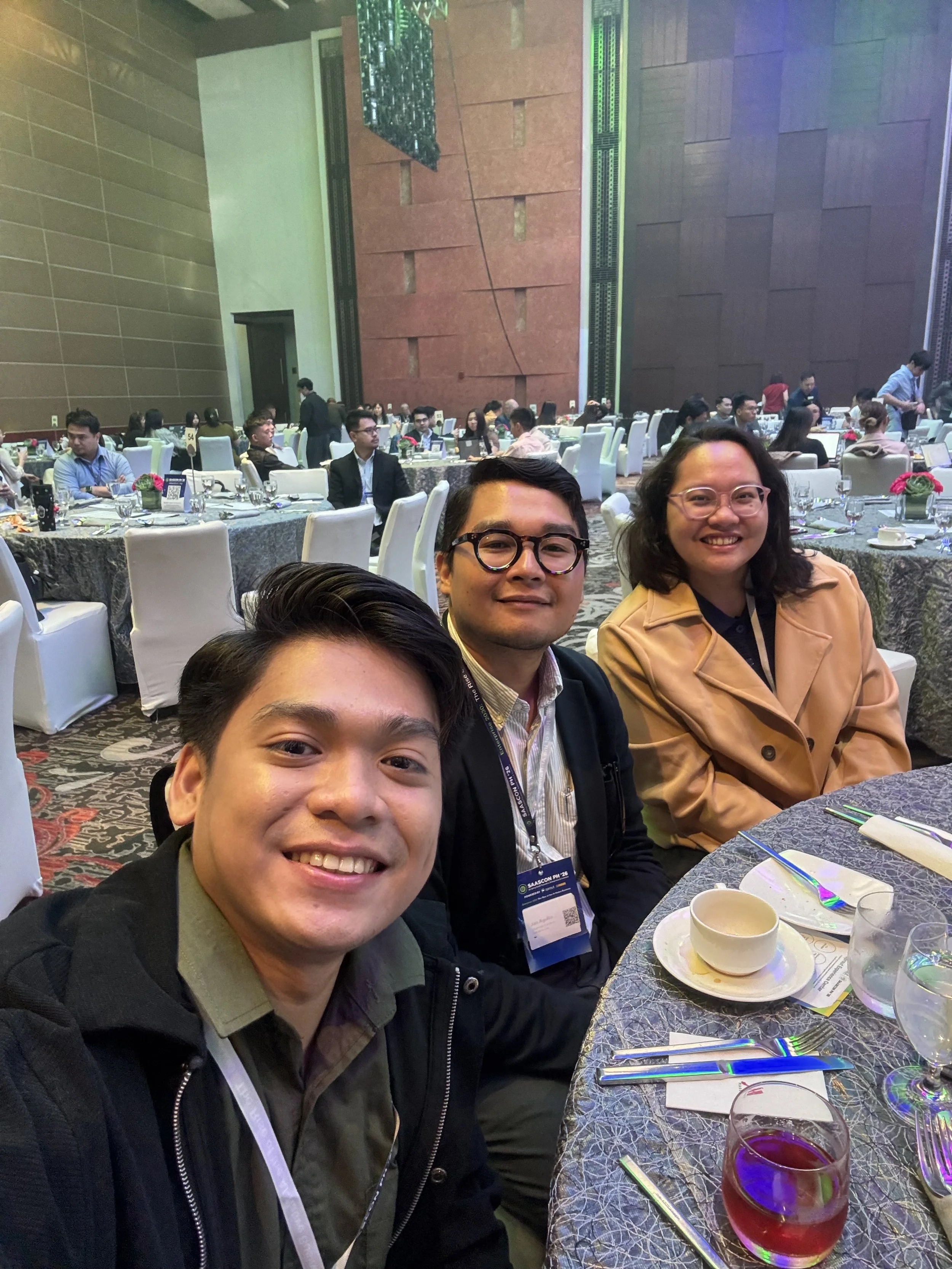
Representing the VCS team! Albert Dela Cruz, Jan Agulto, and Kat Torrefranca taking in the latest insights on how AI is reshaping enterprise architecture and workforce dynamics.
Across SaaSCon PH '26 sessions, one consistent conclusion emerged. AI value creation depends less on experimentation and more on structural redesign of how work is executed.
Why Are AI-Native Organizations Redesigning Their Workflows?
AI-Native Organizations Defined
AI-native organizations are companies that design workflows, operating models, and team structures around AI capabilities from the outset instead of layering AI tools onto existing processes.
AI-native organizations are companies that design workflows, operating models, and team structures around AI capabilities from the outset, instead of layering AI tools onto existing processes.
McKinsey Associate Partner Saurish Basu opened the morning plenary with a clear metaphor. When international field hockey switched its surface from natural grass to synthetic turf, the rules, goals, and ball remained identical. The physics of the turf changed how teams played the game. World-class teams who trained exclusively for grass lost to underdogs who adapted quickly to the new surface.
Basu called AI the AstroTurf moment for business. Markets, cost structures, and competitive objectives remain the same, but the underlying playing surface has structurally shifted.
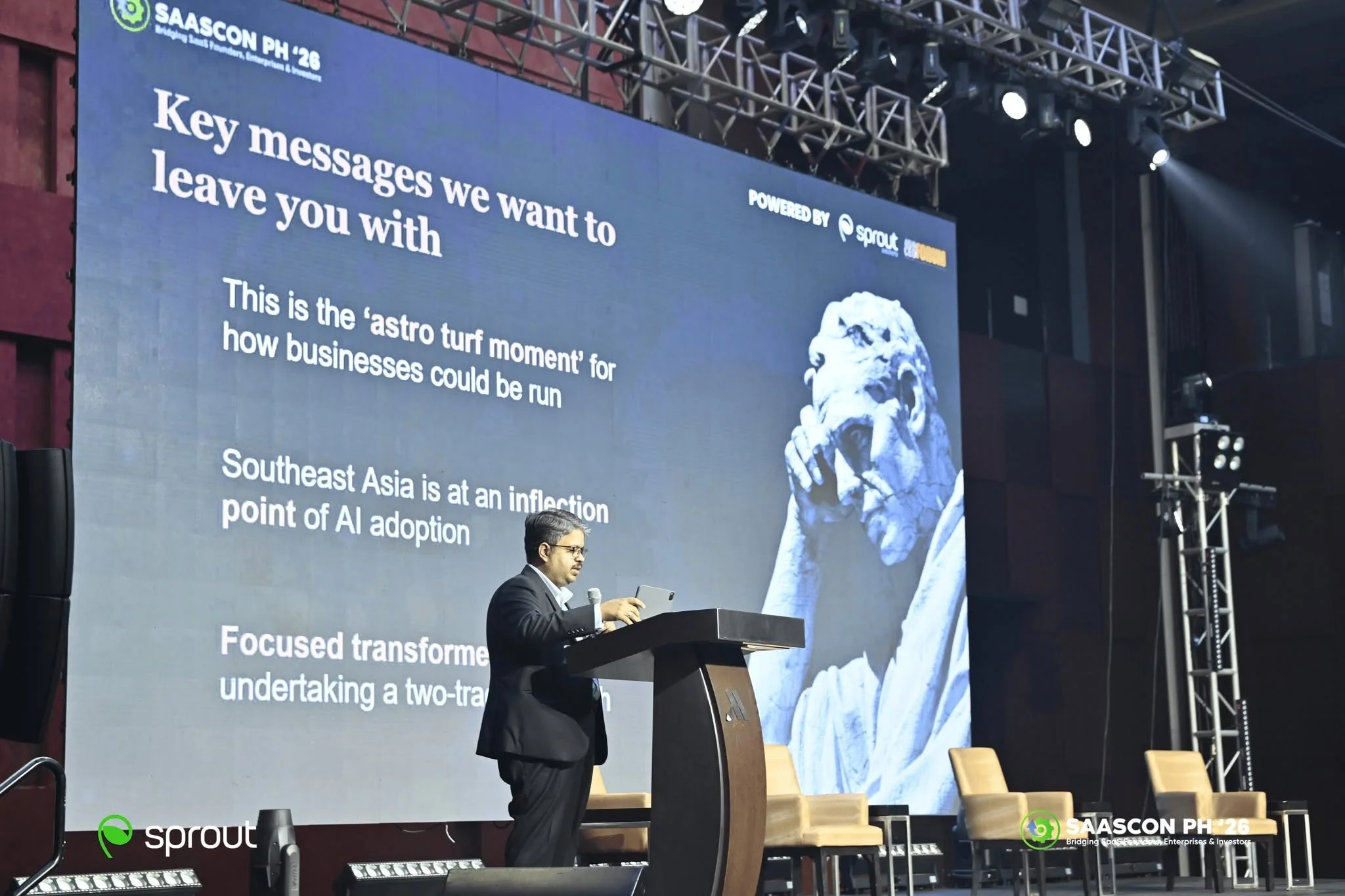
McKinsey Associate Partner Saurish Basu takes the stage to deliver a compelling keynote on strategic transformation and the real-world impact of AI deployment in the enterprise. (Photo courtesy of Sprout Solutions)
According to McKinsey's February 2026 research on AI adoption, organizations that successfully capture measurable business value from AI consistently demonstrate three operational characteristics:
Workflow Redesign — Organizations rebuild processes to allow AI to perform work autonomously rather than inserting AI into existing workflows.
Strong AI Governance — Organizations establish guardrails around data quality, security, and accountability.
Meaningful Investment — Organizations invest in AI initiatives at significantly higher levels than average organizations.
McKinsey's findings suggest that organizational design, not tool adoption, is the primary differentiator between companies generating AI-driven value and those struggling to move beyond experimentation.
This data points to a deeper structural shift for agencies. According to Jan Agulto, VCS Executive Creative Director, the insights from the conference challenged the team to stop thinking about AI as an add-on feature for existing systems and instead start designing entirely new operating models from scratch. "True AI-native organizations are not just trying to eliminate clicks or speed up old processes," he said. "They are completely rebuilding their operational workflows around what AI can do autonomously."
Why Does AI Fail Without Organizational Strategy?
Sprout Solutions CEO Patrick Gentry addressed the necessity of a clear roadmap and the importance of accountability during the CEO fireside chat. "The shift happening now is much bigger than automation," he said. "Businesses are starting to redesign operating models around AI-native workflows and intelligent systems. But even as AI becomes more powerful, accountability still belongs to people. AI should extend human capability, not replace human responsibility."
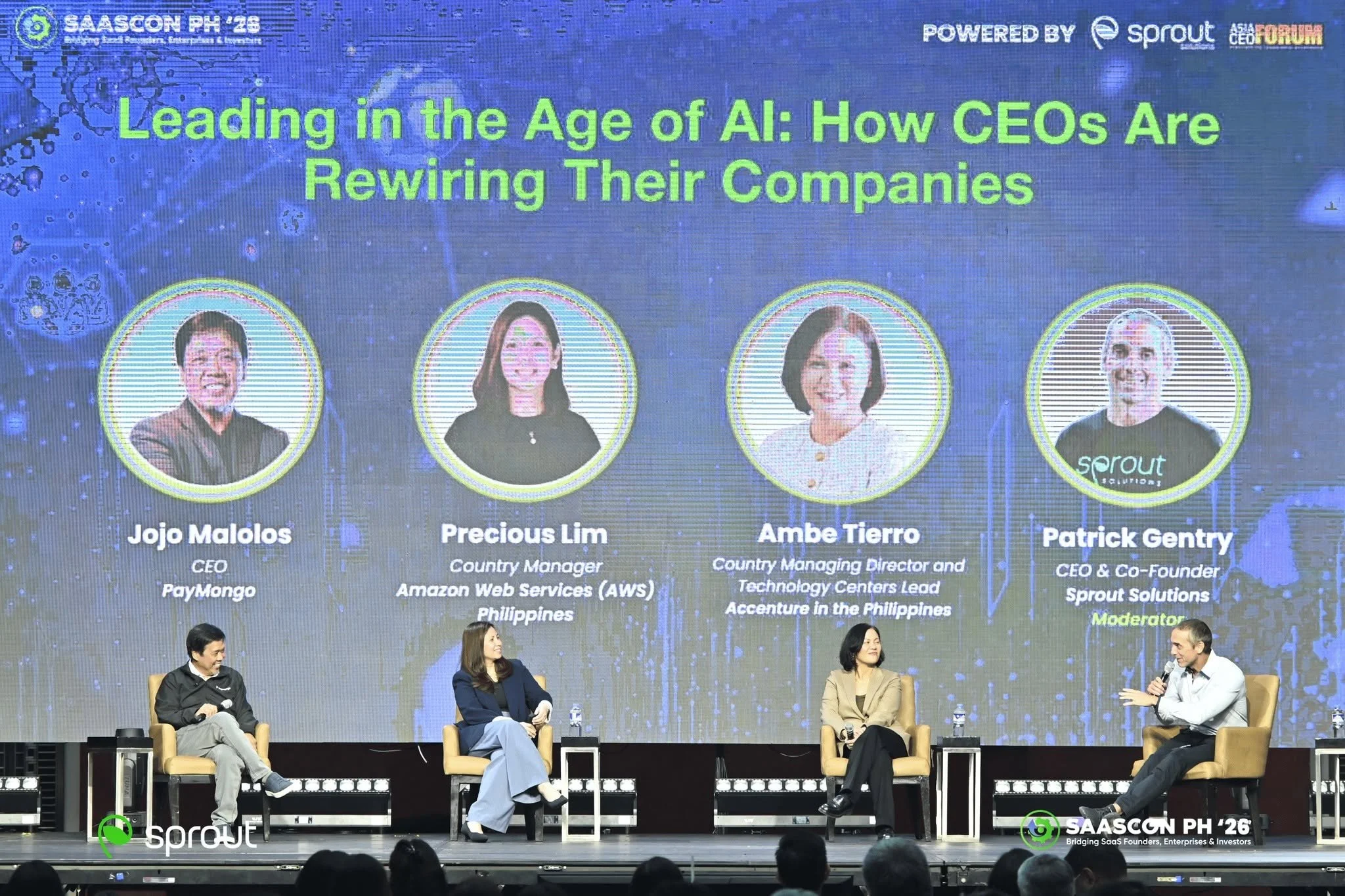
Sprout Solutions CEO Patrick Gentry shares executive leadership strategies during the fireside chat, Leading in the Age of AI: How CEOs Are Rewiring Their Companies.(Photo courtesy of Sprout Solutions)
Sprout Solutions COO Kislay Chandra reinforced this balance between capability and control. "AI is an extension of yourself, your second brain," she said, "but you are still in charge."
Without sharp strategic direction, AI merely helps an agency produce mediocre content faster. A distinct vision ensures that acceleration moves a brand forward.
PayMongo CEO Jojo Malolos reinforced this need for a strong foundation when discussing how he turned around a company facing 800 million pesos in losses in 32 months. He established a clear order of operations: first, organizational discipline to steady the ship, and second, AI acceleration to make that high performance durable for the long haul.
Mechanisms must work manually before automation can scale them safely. This operational discipline is why VCS focuses on deliberate integration rather than rapid adoption.
"We don't need to rush into every new AI tool that comes out," said Albert Dela Cruz, VCS Multimedia Production Manager. "We should continuously learn, experiment, and understand where AI can genuinely help our teams and clients. AI is evolving very quickly, so staying informed and regularly exploring new developments is more valuable than treating AI as a one-time investment."
How Do High-Performing Teams Use AI Differently?
mWell Chief Product and Innovation Officer Albert Padin shared how AI use divides the workforce into two distinct categories.
The Shortcutters: This group treats AI as a pure hack. They generate, copy, paste, and finish. The output is fast, but the lack of care is obvious.
The Craftsmen: This group moves outputs from tool to tool, pushes the capabilities, refines the details, and stops only when the work is exceptional.
"The ones who put care and love into using AI and working together with AI will strategically benefit so much more," Padin said. "As leaders, what I hope you can take away from this is don't just look at productivity gains. Urge everyone in your team to elevate the standards."
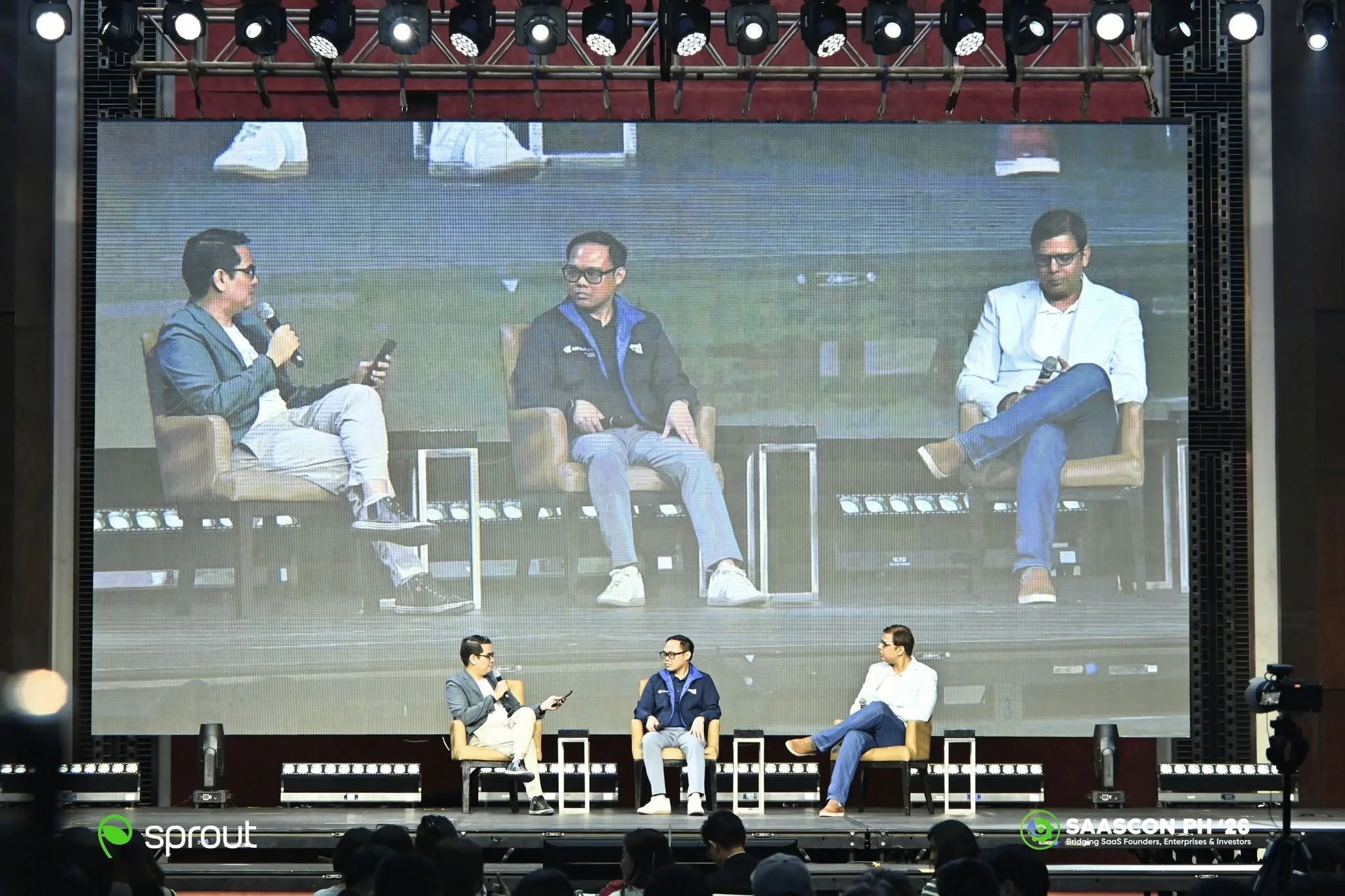
Diving deep into infrastructure. Moderator Gian Dela Rama and panelists Abhinav Chugh and Albert Padin unpack The AI Stack: Platforms, Agents, and the New Enterprise Architecture. (Photo courtesy of Sprout Solutions)
Sprout Solutions CTO Gian Dela Rama echoed this framing from a product perspective. "The future belongs to organizations that can combine AI fluency with strong human judgment," he said. "AI can automate repetitive work and accelerate execution, but creativity, systems thinking, accountability, and leadership remain deeply human responsibilities."
According to the Digital 2026 report by Meltwater and We Are Social, the Philippines ranks sixth globally in ChatGPT usage. The report found that 42.4% of Filipino internet users use ChatGPT monthly, compared to a global average of 26.5%.
This widespread adoption has contributed to a significant increase in AI-generated content across digital channels, creating a more crowded information environment for consumers and brands alike.
As content production becomes easier, differentiation becomes harder. For brands, competitive advantage is no longer content volume but originality, relevance, and trust. For agencies, this raises the importance of human oversight. AI can accelerate execution, but strategic direction, creative judgment, and brand stewardship remain essential responsibilities.
What Human Skills Still Matter in the Age of AI?
Canva Regional People Lead Alvanson So introduced a necessary internal metric: Change Empathy.
Change Empathy Defined
Change Empathy is a change-management approach that prioritizes helping people adapt emotionally and psychologically to organizational transformation rather than focusing solely on implementation logistics.
"Change empathy is a different dimension of change management," So explained. Traditional change management often focuses purely on logistics and getting things done, without intentionally putting in the time and effort to bring people along on the journey.
"That is what empathy tries to fix," he said. "Kindness is a human value that will really usher in a better era of change, particularly in the age of technology."
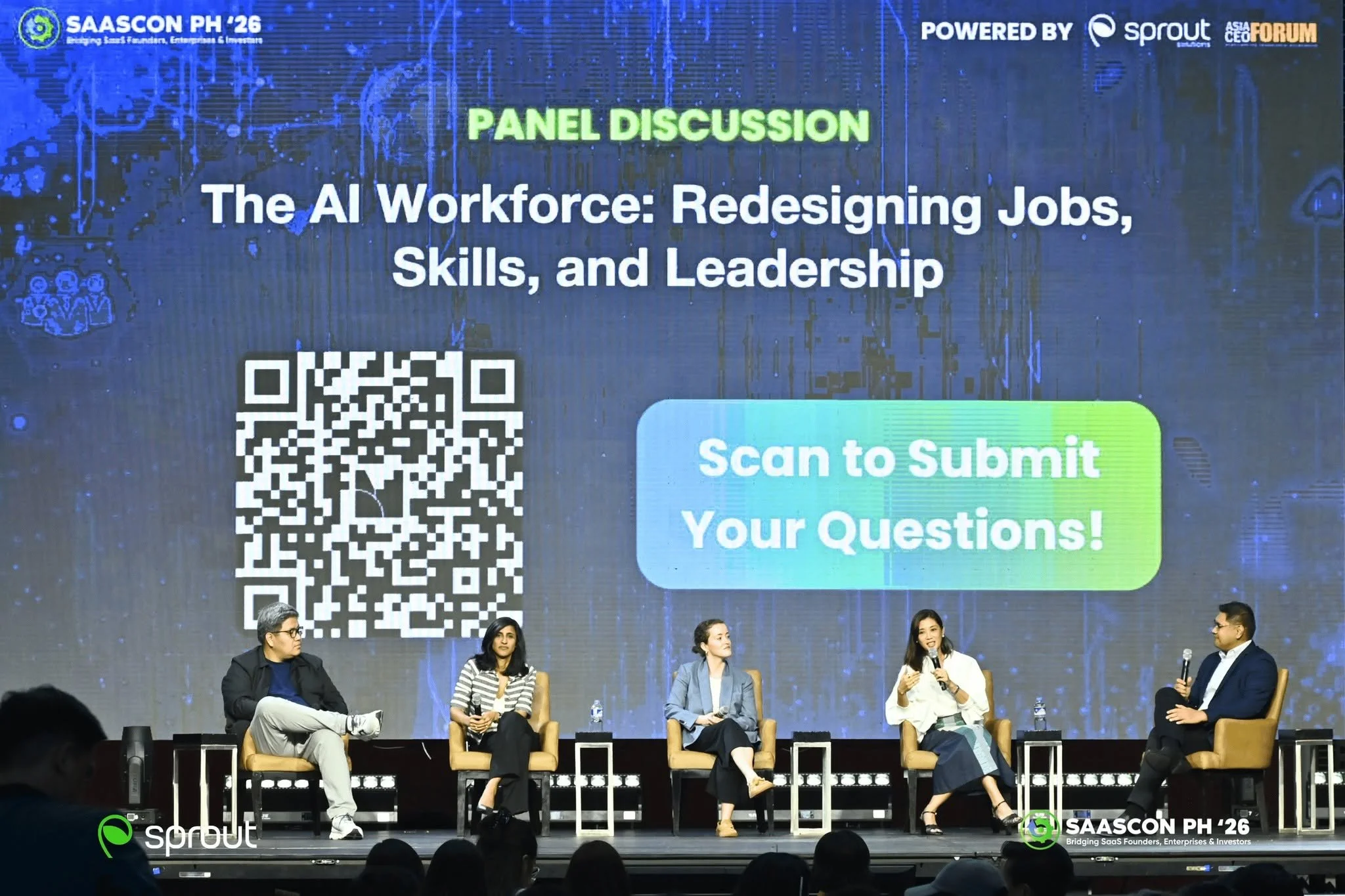
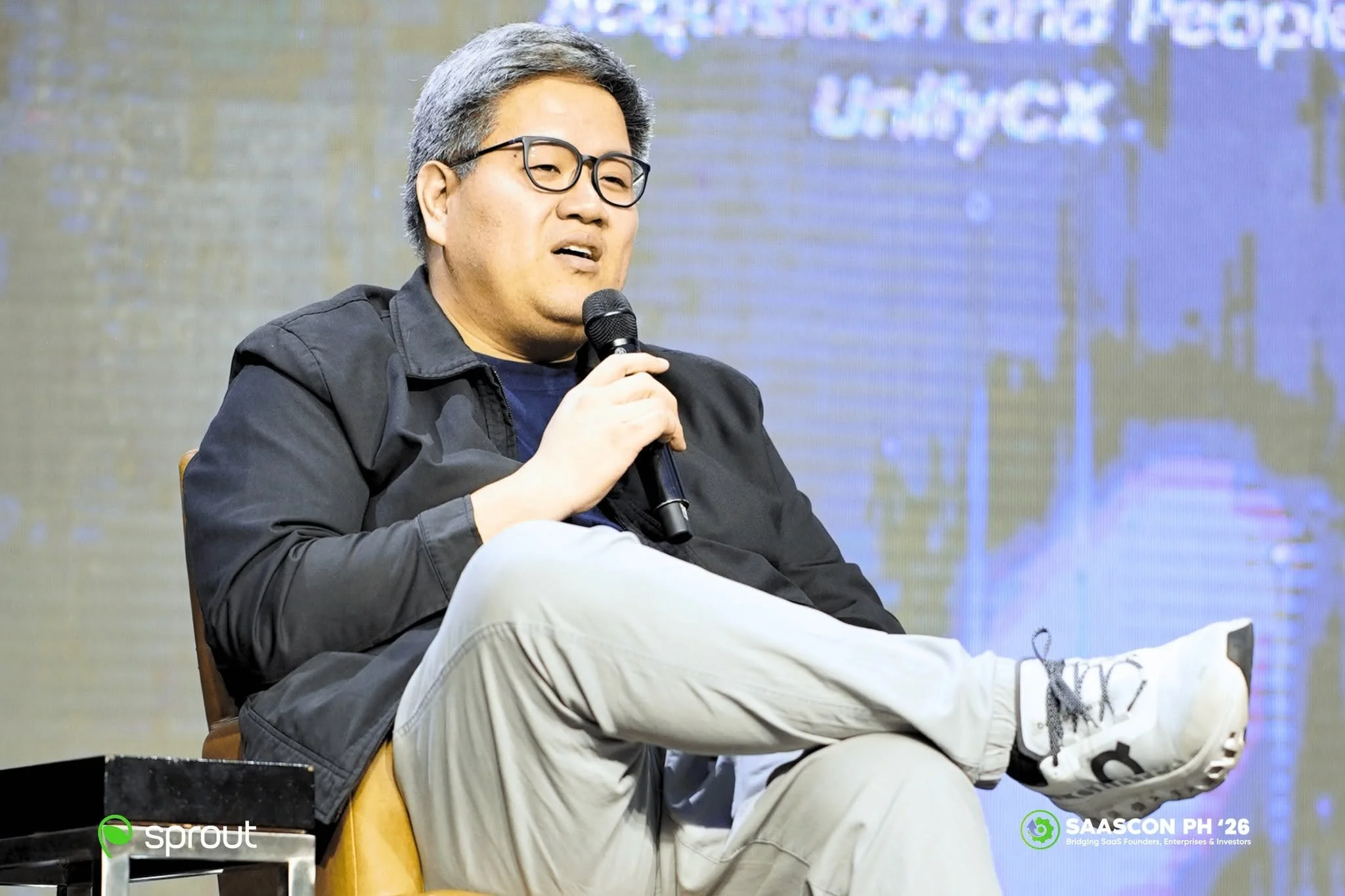
Canva Regional People Lead Alvanson So shares human-centric perspectives during the panel discussion on The AI Workforce: Redesigning Jobs, Skills, and Leadership. (Photos courtesy of Sprout Solutions)
Sophisticated AI strategy still relies on human trust. So noted that because AI handles repetitive, predictable administrative tasks, humans must take on the high-level responsibilities that remain:
Objective human judgment
Client relationship management
Navigating complex brand context
Taste, tone, and cultural nuance
AI can generate a caption based on a prompt. It cannot understand the emotional reason behind a brand's tone, a client's unspoken business worries, or why a technically correct layout feels flat.
"The repetitive, predictable, administrative work can and should move to AI. That frees people up for the work that actually matters: judgment, relationships, context, taste," says Kat Torrefranca, Creative Strategy Director. "The question SaaSCon raised is not whether humans are still needed. It is whether we are developing the right human skills for the work that remains.”
Why Do AI Habits Matter More Than Frameworks?
AWS Philippines Country Manager Precious Lim offered a realistic timeline for teams building static AI roadmaps. "Whatever we speak about today will be outdated in a month's time, or even faster than that," she said.
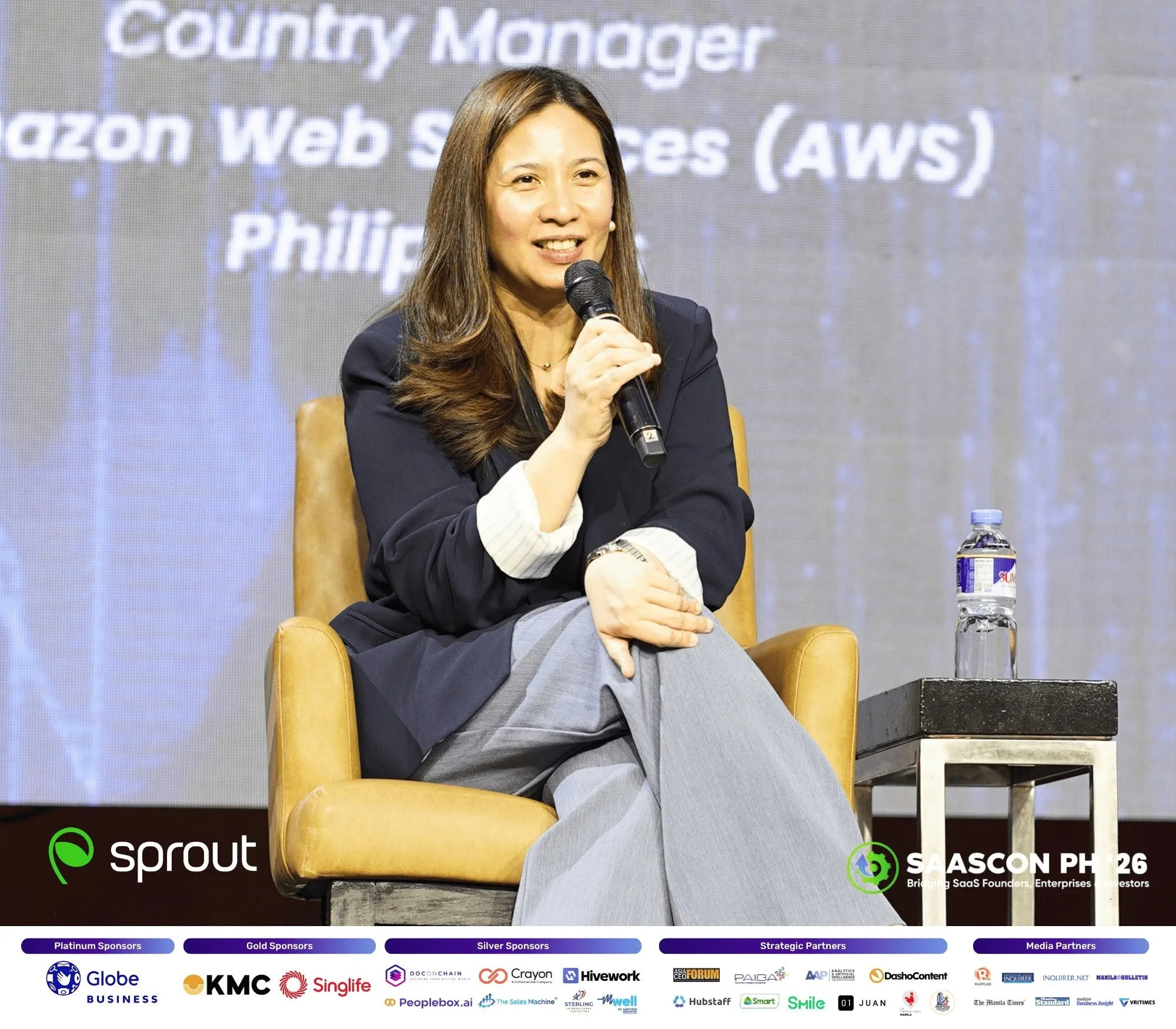
Precious Lim sharing key organizational takeaways during the core session: Leading in the Age of AI: How CEOs Are Rewiring Their Companies (Photo courtesy of Sprout Solutions)
Rigid frameworks become liabilities when technology moves faster than planning cycles. Agencies need to build an organizational habit of constantly revisiting and updating systems, rather than trying to build a permanent one.
Jan Agulto connected this directly to client enterprise modernization. "It made me realize we should stop looking at client legacy tech as a roadblock and start seeing it as a foundation we can wrap agentic workflows around, provided we clean up the data fragmentation first," he said.
Why Is AI Shifting From Tool Adoption to Operating Model Design?
One theme surfaced repeatedly throughout SaaSCon PH '26. Organizations are no longer asking which AI tools to adopt. They are asking how work should operate when AI can execute entire workflows autonomously.
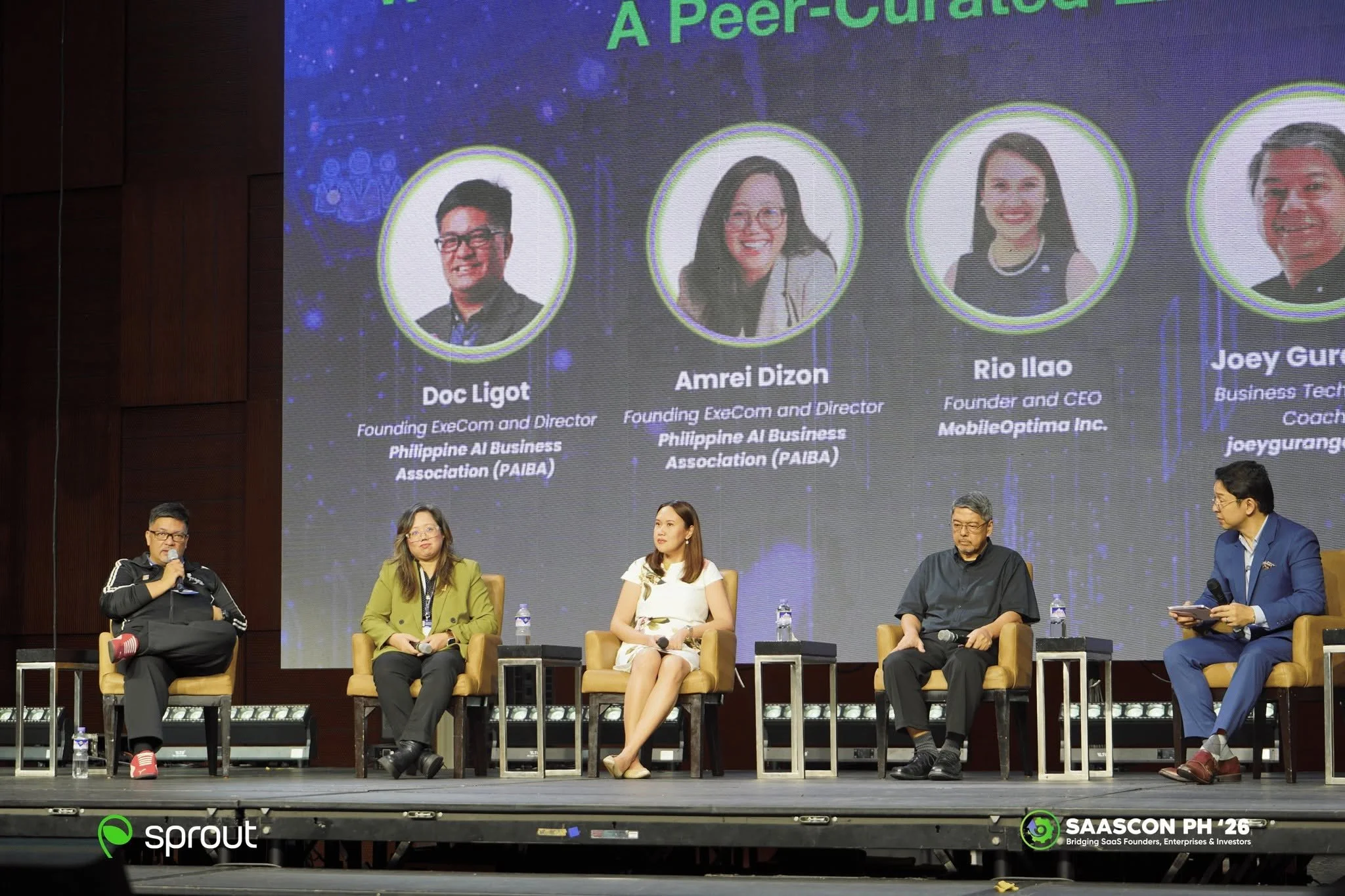
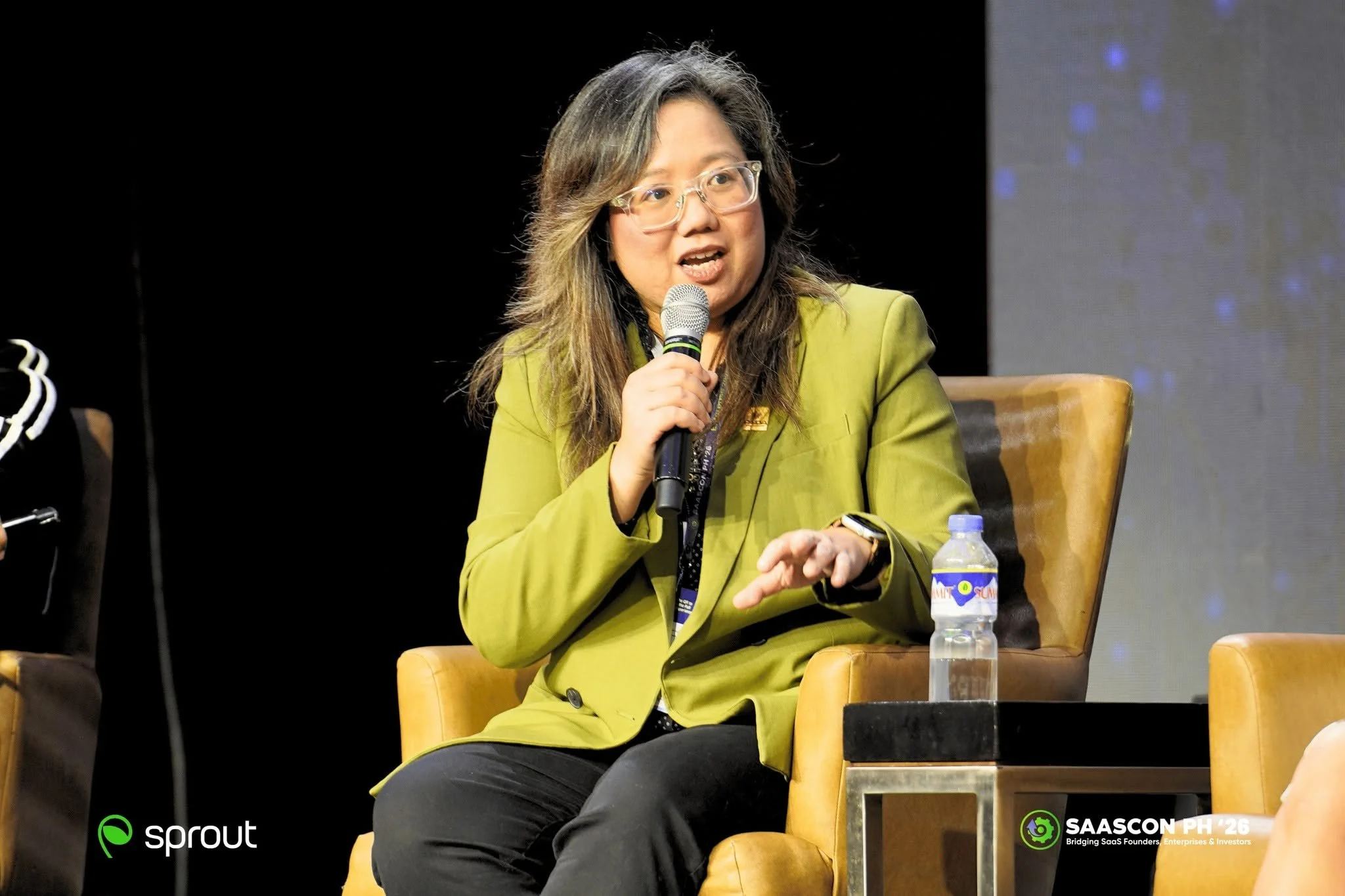
Real talk on scaling smaller enterprises. VCS Chief Creative Officer, Amrei Dizon, joins Moderator RJ Ledesma and fellow panelists Doc Ligot, Rio Ilao, and Joey Gurango for a peer-curated exchange on AI for SMEs. (Photos courtesy of Sprout Solutions)
Tool adoption focuses on improving existing work. Operating model design focuses on reimagining how work gets done altogether. According to multiple speakers throughout the conference, the organizations generating the greatest value from AI are increasingly pursuing the latter. This shift may ultimately become the defining characteristic of AI-native organizations.
How Is VCS Responding to the Shift Toward Agentic AI?
SaaSCon PH '26 reinforced a growing reality. Successful AI adoption is becoming less about tools and more about organizational design.
The companies generating measurable value from AI are not necessarily the fastest adopters. They are the organizations willing to redesign workflows, rethink team structures, and continuously adapt as the technology evolves.
For VCS, the question is no longer whether AI will change the way we work. The question is how intentionally we choose to evolve alongside it.
✨ Build future-ready creative systems with us: https://vitalstrats.ph/contact-us
📲 Follow our work and insights across platforms:
Facebook: facebook.com/vitalstrats
LinkedIn: linkedin.com/company/vitalstrats-creative-solutions
Instagram: instagram.com/vitalstrats
X: x.com/Vitalstrats
YOU MAY ALSO LIKE
Vitalstrats Creative Solutions (VCS) is a creative agency based in Quezon City, Philippines. VCS specializes in content marketing, advertising, and video production. We use strategic creativity to help our clients grow their brands.
Facebook: https://www.facebook.com/vitalstrats
Instagram: https://www.instagram.com/vitalstrats
Twitter: https://twitter.com/Vitalstrats
Agency Reel: http://bit.ly/VCSReel2019