
Beyond SEO: Is Your Brand Invisible to the Next Generation of Search?
By Sophia Alcaraz, Digital Content & PR Specialist at Vitalstrats Creative Solutions (VCS)
Key Takeaways from PANA 3rd GMM 2026
Shift to AIO: As of 2026, 61% of Gen Z prefer LLMs like ChatGPT over Google. Visibility now depends on being cited by AI, not just ranked by it.
Philippine Context: The Philippines ranks 5th globally in AI adoption, creating a narrowing window for early-mover authority.
The 89% Rule: AI-generated responses favor earned media and high-authority sources. Credibility is now a technical requirement for discoverability.
Human intelligence still leads: Interpretation, judgment, and narrative context remain essential even as AI automates information retrieval.
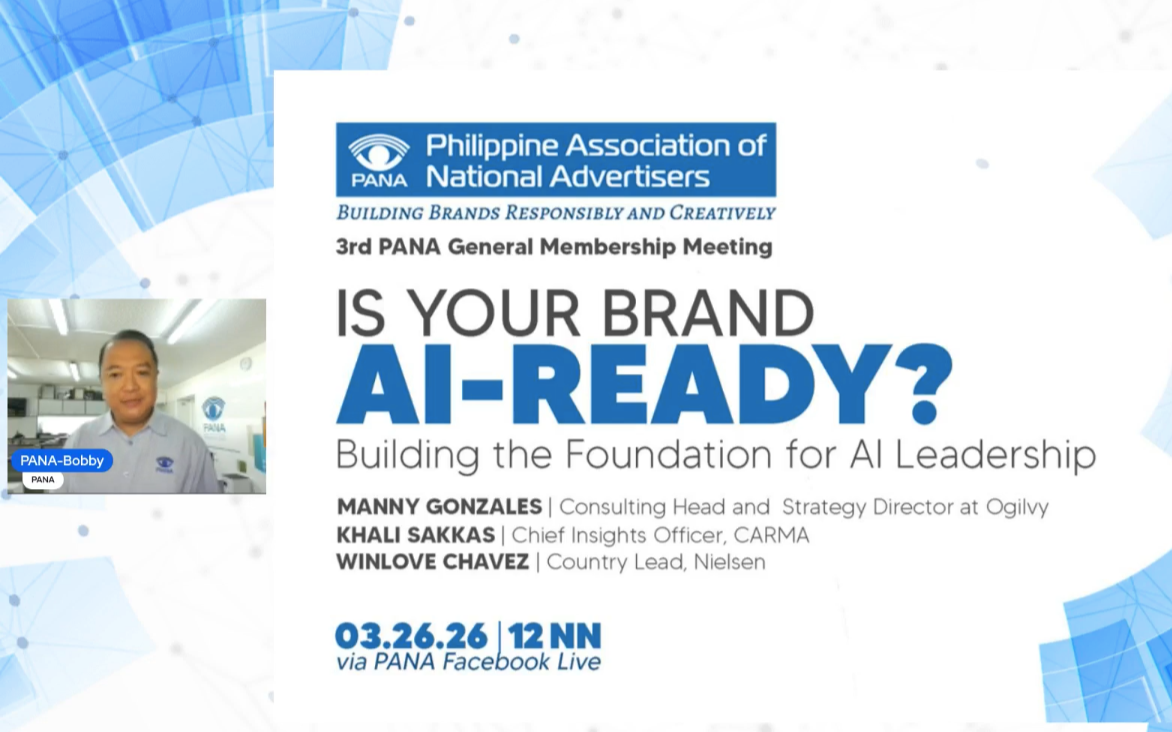
Bobby Simborio, Executive Director of the Philippine Association of National Advertisers (PANA), introducing the topic of the 3rd PANA GMM
AI-driven search is changing how brands are discovered online. At the 2026 PANA 3rd General Membership Meeting, industry leaders highlighted a fundamental shift: visibility is no longer determined solely by Google rankings, but by whether AI systems like ChatGPT surface, cite, and trust your brand in generated answers.
According to insights shared by CARMA at the event, 61% of Gen Z users now prefer large language models over traditional search engines for information discovery. At the same time, 89% of links referenced in AI-generated responses come from earned media and high-authority sources. The implication is clear. Brands that fail to build credible, structured, AI-readable content risk becoming invisible in the next generation of search.
For VCS, this shift reinforces a principle we have worked from since 2004—creative work is only as strong as the strategy behind it. In the AI era, that strategy now includes both human storytelling and machine discoverability.
What is AI Optimization (AIO)?
AI Optimization (AIO) is the process of structuring content and digital narratives so AI systems can accurately interpret, retrieve, and cite a brand in generated responses. Unlike traditional SEO, AIO focuses on machine-readable credibility, authority, and contextual relevance. Industry discussions increasingly refer to this transition as "Answer Engine Optimization (AEO)"—a shift from optimizing pages for rankings to optimizing information for AI retrieval and citation.
How Are AI Answer Engines Replacing Traditional Search?
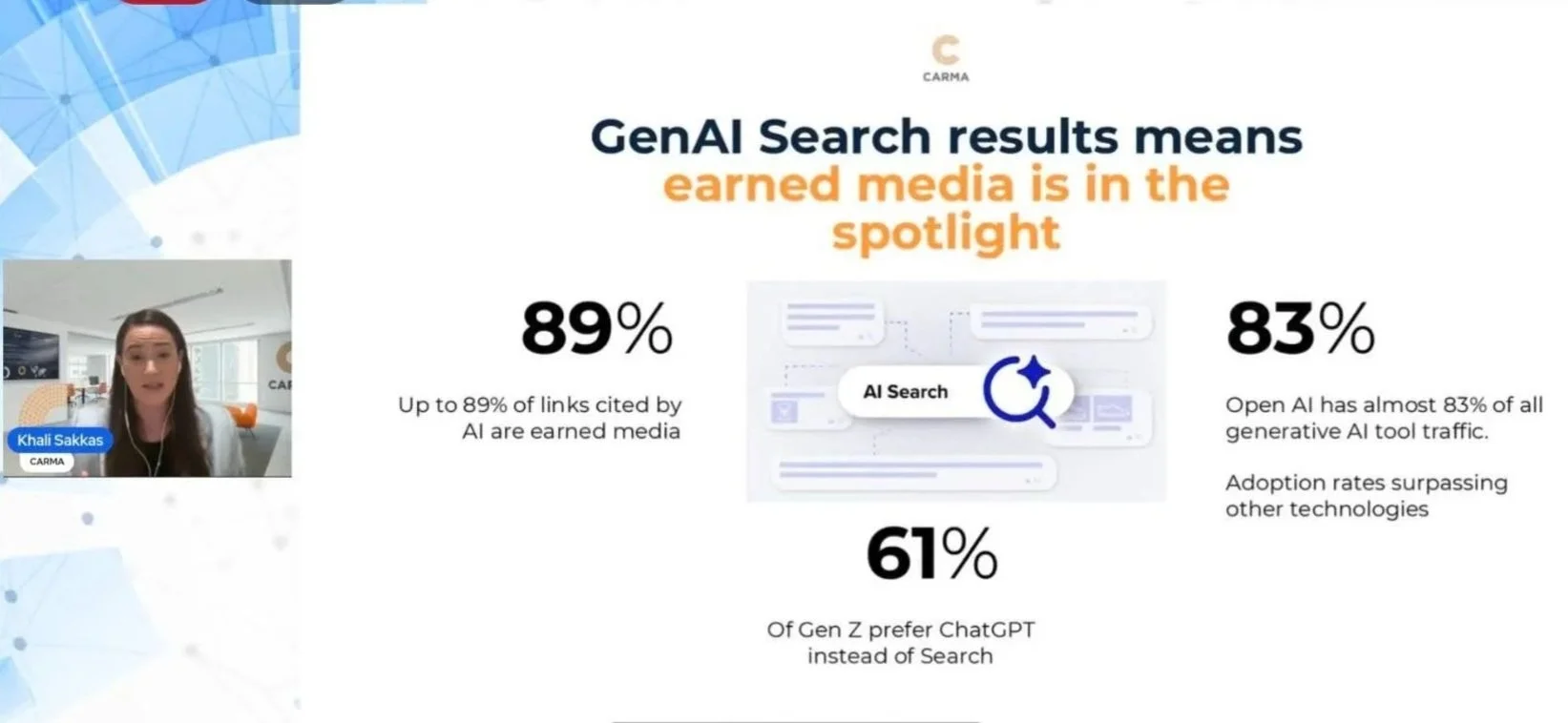
Khali Sakkas analyzes the change toward LLMs and the dominant role of reputable sources in AI-generated answers
The most pressing shift in digital behavior is not gradual. It is structural.
According to Sakkas, the shift toward AI-assisted discovery is not incremental. It reflects a structural change in how younger audiences search for information, recommendations, and trusted sources online.
In this new "Answer Engine" era, if an AI model doesn't cite your brand when a user asks for a recommendation, you are effectively invisible. We are witnessing a fundamental pivot from Search Engine Optimization (SEO) to AI Optimization (AIO).
This urgency is especially real in the local context. Winlove Chavez of Nielsen pointed out that the "early mover advantage" in AI is tangible—and the Philippines is already leading the charge, currently ranking 5th globally in AI tool adoption as of May 2026. Our market is moving faster than most, and the window to claim authority within these AI models is narrowing.
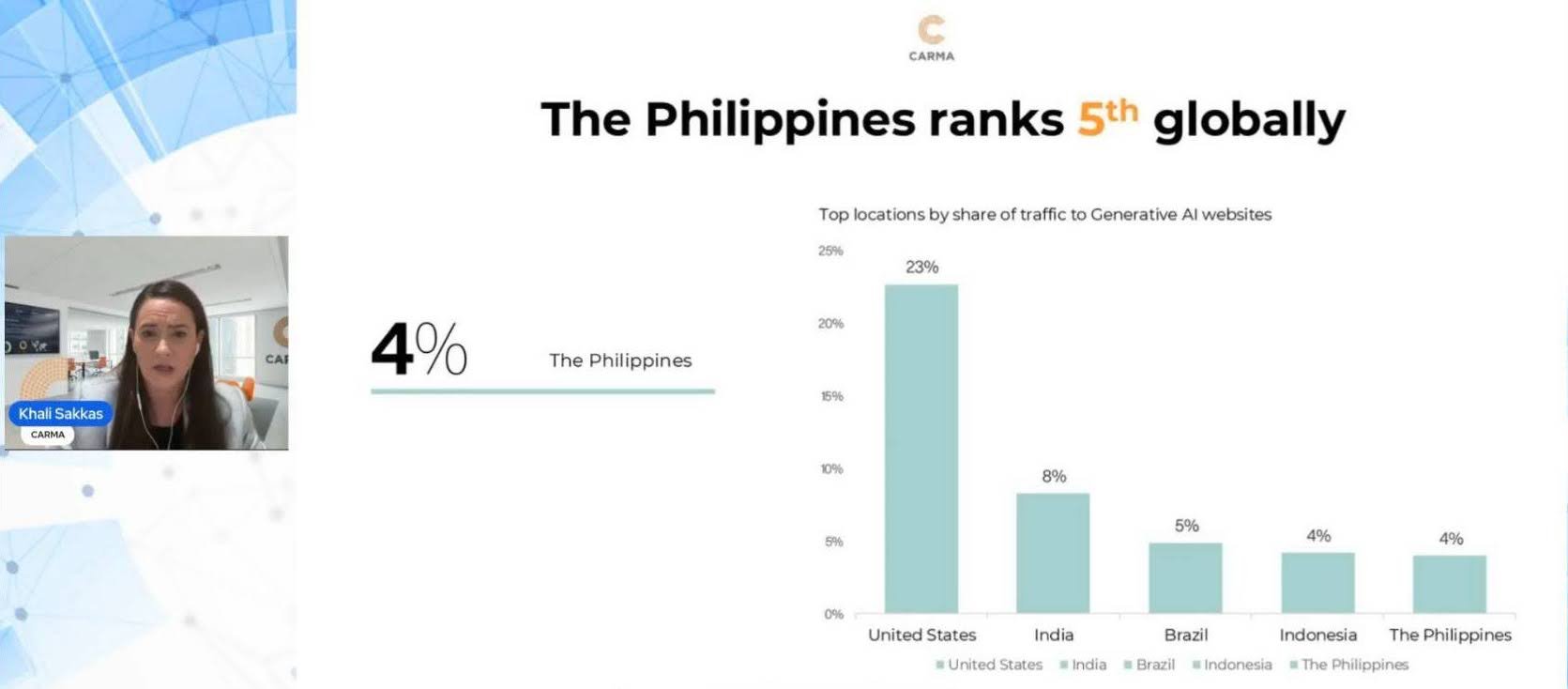
A Global Leader in AI Adoption: The Philippines ranks 5th in AI use
Why Does AI Visibility Depend on Brand Credibility?
For years, content strategy has been discussed in terms of storytelling, engagement, and reach. AI-driven discovery changes how content earns visibility and authority online.
According to Khali Sakkas, Chief Insight Officer of CARMA, 89% of links surfaced in AI-generated responses originate from earned media and high-authority publications—reinforcing that AI visibility is increasingly tied to credibility rather than publishing volume.
So what does this mean for your brand?
Human intelligence remains foundational.
As Manny Gonzalez of Ogilvy Consulting noted during the discussion, quoting author Steven Johnson: "In the age of large language models, there's a revenge in the humanities." The statement underscores how interpretation, judgment, and narrative context remain critical even as AI systems automate information retrieval.
Quality over volume.
Brands must move away from noise and toward high-quality narratives that serve as reputable data points for AI models to cite.
Silence carries real risk.
Without an optimized and credible digital presence, brands risk not only invisibility but also misrepresentation—as outdated or fragmented information may resurface without context or correction.
The window to establish authority within these systems is still open. But it is narrowing.
At VCS, we see AI visibility as a credibility problem before it is a content problem. Brands are no longer competing only to publish more. They are competing to become trusted sources that AI systems choose to surface and cite.
How Does VCS Help Brands Prepare for AI-Driven Discovery?
Adapting to AI-driven discovery requires more than traditional SEO. Brands now need structured narrative systems that help AI models interpret who they are, what they offer, and why they are credible sources within their category.
In our work with brands adapting to AI-driven discovery, we have seen that visibility increasingly depends not only on publishing content, but on whether AI systems recognize that content as credible, structured, and authoritative.
As AI-powered answer engines increasingly summarize information instead of listing search results, content must be structured clearly enough for AI systems to extract, interpret, and cite accurately. By aligning creative strategy, structured content, and authoritative storytelling, brands can improve how AI systems interpret and prioritize their brand narratives online.
A brand's story only has power if it can be found. This is where the intersection of human-centric creativity and technical precision becomes a brand's greatest advantage.
What Makes a Brand AI-Ready in 2026?
Since 2004, we at VCS have helped brands navigate major shifts in communication, digital visibility, and audience engagement. While technology continues to evolve, the core mission remains unchanged: building systems where technology strengthens human connection rather than replaces it.
In the AI era, brand readiness can be understood through three core pillars:
Audit Your Discoverability
Go beyond keywords and surface-level SEO. Define and structure your brand's core narratives so they can be consistently interpreted and cited by AI systems.
Prioritize Credibility
Invest in authoritative, high-quality content that strengthens your brand's position as a trusted source within your category.
Act Early
With AI adoption accelerating rapidly—particularly in markets like the Philippines, where the country ranks 5th globally—early movers have a clear advantage in defining category authority before standards fully consolidate.
The next generation of search will not be won by the loudest brand. It will be won by the most citable one.
✨ Build future-ready creative systems with us: https://vitalstrats.ph/contact-us
📲 Follow our work and insights across platforms:
Facebook: facebook.com/vitalstrats
LinkedIn: linkedin.com/company/vitalstrats-creative-solutions
Instagram: instagram.com/vitalstrats
X: x.com/Vitalstrats
YOU MAY ALSO LIKE
Vitalstrats Creative Solutions (VCS) is a creative agency based in Quezon City, Philippines. VCS specializes in content marketing, advertising, and video production. We use strategic creativity to help our clients grow their brands.
Facebook: https://www.facebook.com/vitalstrats
Instagram: https://www.instagram.com/vitalstrats
Twitter: https://twitter.com/Vitalstrats
Agency Reel: http://bit.ly/VCSReel2019