
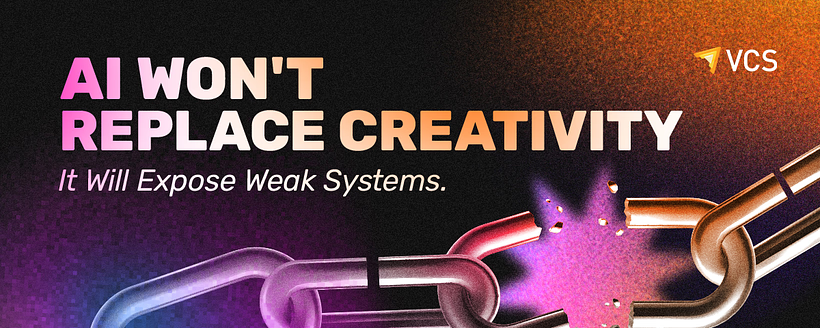
AI Won't Replace Creativity. It Will Expose Weak Systems.
Written by: Kat Torrefranca
Key Insights
AI is reducing the value of execution while increasing the value of direction.
Organizations that rely on AI alone risk becoming indistinguishable from competitors.
Brand authenticity comes from systems, judgment, and institutional knowledge, not prompts.
The future competitive advantage is access to AI directed with purpose.
Two stories dominate the AI conversation right now. Neither of them is true.
The first is the fear story: AI is coming for your job, your industry, your relevance. The second sounds like the antidote: learn to code, get technical, earn your place at the table. Both are built on the same assumption: that the most valuable thing you can do in an AI-powered world is execute faster.
That assumption is already costing organizations more than they realize.
That assumption is already limiting how organizations think about the technology.
At the She Builds Tech Summit 2026 in Iloilo, VCS Chief Creative Officer Amrei Dizon offered a different perspective: the real shift is not simply about who can produce more. It is about who can direct with greater clarity—and why that capability is already separating distinctive brands from those beginning to sound the same.
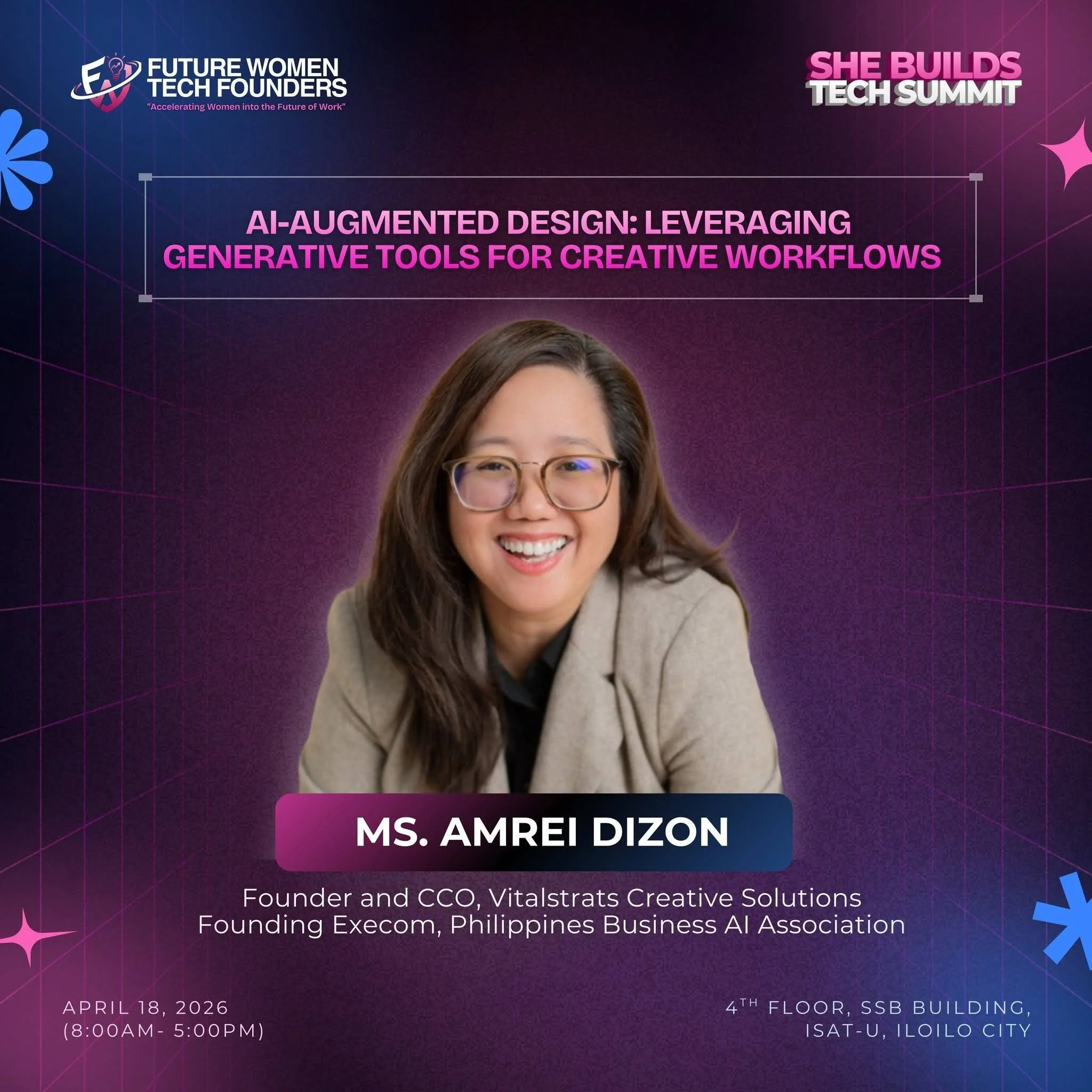
VCS Chief Creative Officer Amrei Dizon joined She Builds Tech Summit 2026 to discuss how generative tools can support more intentional creative workflows.
The summit formed part of the Future Women Tech Founders initiative, a program designed to strengthen the local pipeline of women creating and leading technology ventures. Made possible with funding support from the Department of Science and Technology–Western Visayas, the event brought together women founders, developers, professionals, educators, and advocates across Western Visayas.
It was organized by Future Women Tech Founders, DEVCON Iloilo, Global Shapers Community–Iloilo Hub, UMWAD Western Visayas, the DOST Innovation Hub, and DOST Western Visayas. The gathering also connected with DEVCON Philippines’ broader #SHEISDEVCON program, which supports women and girls in technology through mentorship, education, leadership events, and community building.
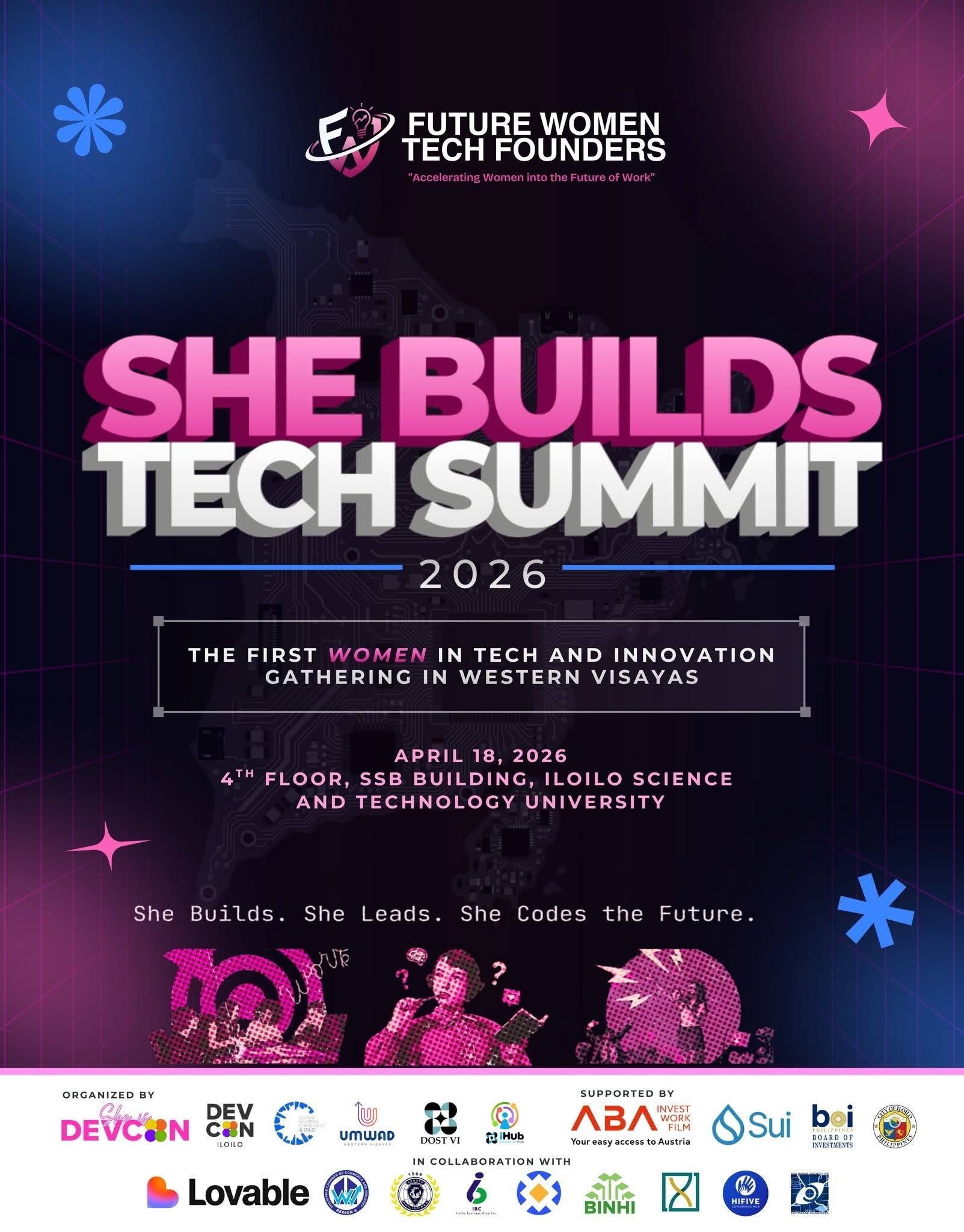
She Builds Tech Summit 2026 gathered women shaping technology and innovation in Western Visayas.
When AI Becomes the Operating System
For years, AI was primarily treated as a productivity tool. Organizations used it to automate repetitive tasks, accelerate execution, and reduce the time required to move from one stage of work to another.
That role has expanded.
McKinsey’s research on the state of AI found that organizations are increasingly using AI across multiple business functions, particularly in marketing and sales, product development, service operations, software engineering, and knowledge management. AI is no longer sitting outside the workflow. It is beginning to perform parts of the workflow itself.
That changes the question organizations need to ask.
The conversation has moved past, “Should we use AI?”
It is now, “How do we use AI without becoming indistinguishable from everyone else using the same tools?”
That is a harder question. And it does not have a tool for an answer.
Why Do Most AI Outputs Feel the Same?
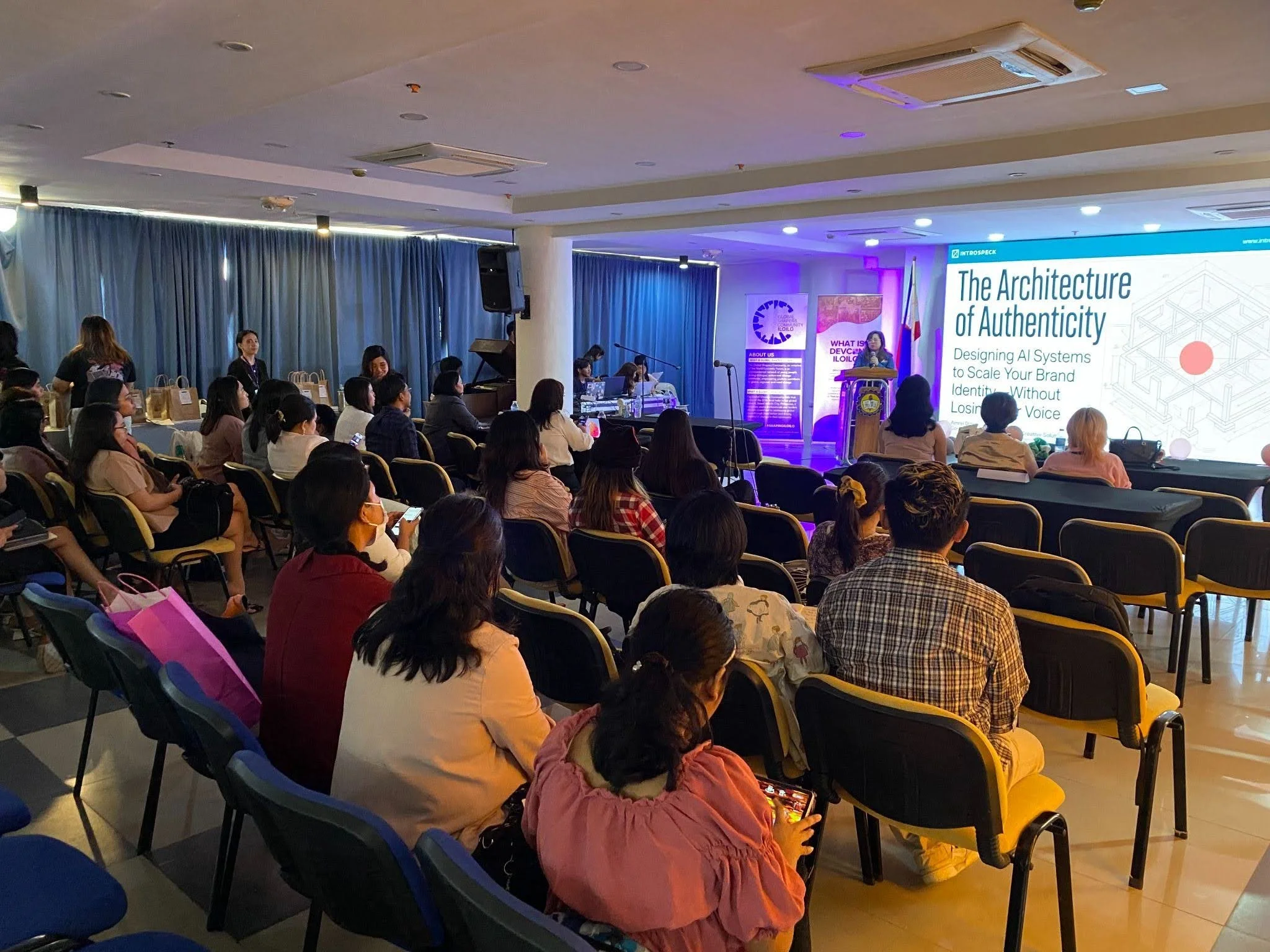
Women across technology, entrepreneurship, education, and advocacy gathered at She Builds Tech Summit 2026.
Here's the misconception worth clearing up: AI doesn't inherently create generic output. It reflects the quality of the context it receives.
When given no direction, large language models generate statistically probable outputs based on whatever context is available, defaulting to the average of everything they've ever learned. And the average of the internet, as Amrei put it during the session, is exhausting.
Research backs this up: studies show that outputs improve substantially when prompts include richer context, constraints, and examples rather than open-ended instructions.
What creates differentiation are the things AI cannot generate on its own:
Customer understanding
Organizational culture
Lived experience
Decision-making frameworks
Strategic judgment
These shape how an organization thinks, communicates, and solves problems.
They are the outliers. And the outliers have to come from you.
The ingredients of distinctiveness are often already inside the organization: institutional knowledge, internal language, customer understanding, and years of lived experience.
The challenge is creating an architecture that can surface those assets consistently. Because uniqueness without architecture does not scale.
How Is AI Changing the Role of Creative Professionals?
AI is reshaping what professional and creative work actually looks like and where human value sits within it.
The shift is visible across every discipline. Where humans once focused primarily on production, the emerging model places human effort at the strategic bookends: defining the problem, setting direction, and evaluating the outcome. AI handles the middle: drafting, iterating, generating volume at speed.
Microsoft's 2025 Work Trend Index notes that AI is increasingly shifting human work toward judgment, orchestration, and decision-making rather than production. This is a pattern visible across creative, technical, and operational roles alike.
As execution becomes more accessible, the ability to direct outcomes grows more valuable. The professionals making the biggest impact now are those who can define problems clearly, provide meaningful context, connect outputs to business objectives, and exercise sound judgment throughout.
As Amrei said at the summit: "Coding is a commodity. Direction is the skill."
A tech statement on the surface but the logic extends to design, marketing, strategy, operations, and leadership. As AI absorbs more of the execution layer, direction becomes the defining capability across every discipline.
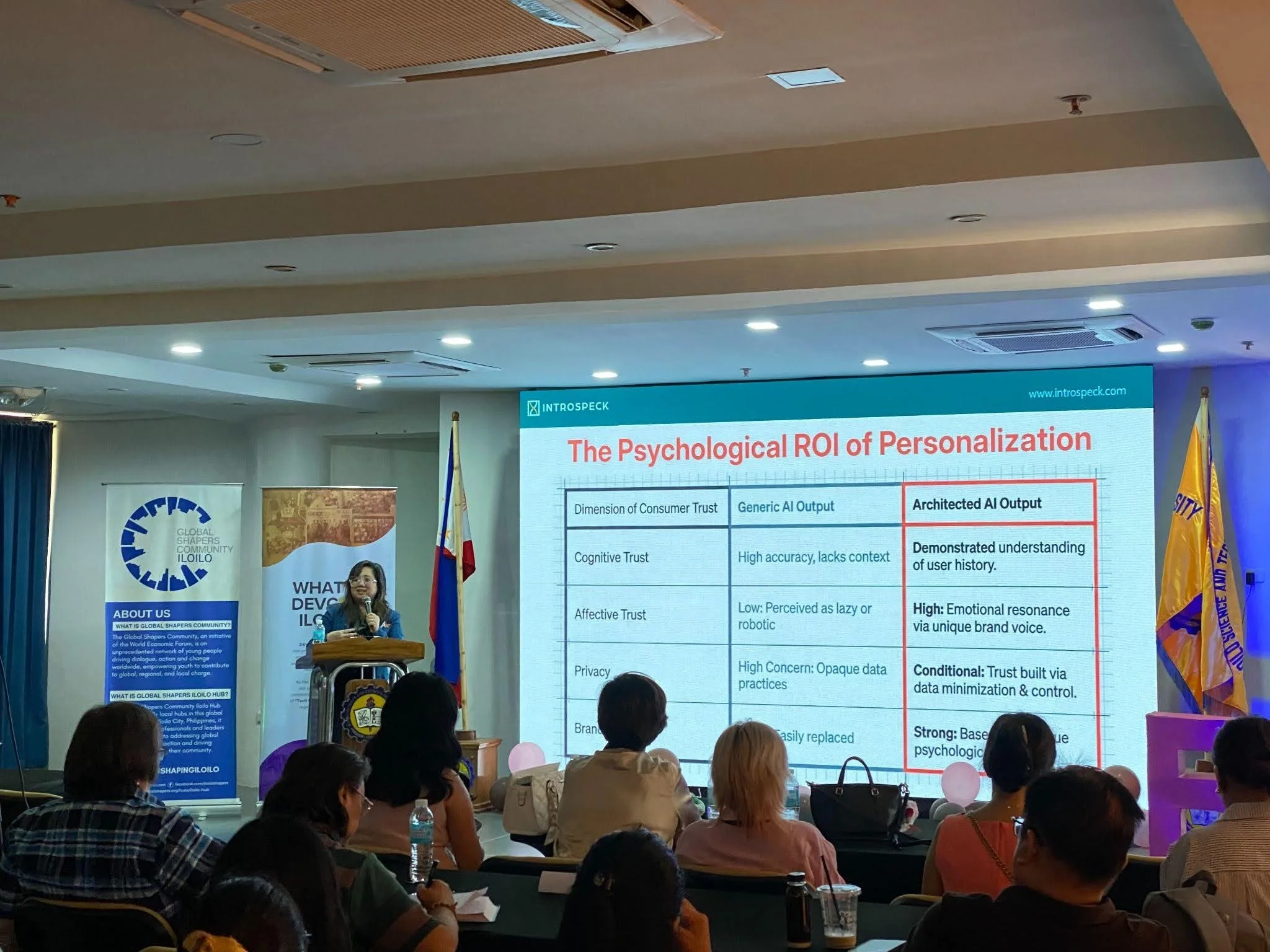
Amrei Dizon discusses how stronger brand systems can guide AI-enabled work.
Authenticity Is Architected
As AI becomes more accessible, the real risk for brands is sounding identical to everyone else using the same tools with the same prompts.
Generative AI produces the most likely response based on what it receives. Without clear direction, it defaults to average. And when the entire market is working from similar inputs, average becomes very hard to distinguish from the competition.
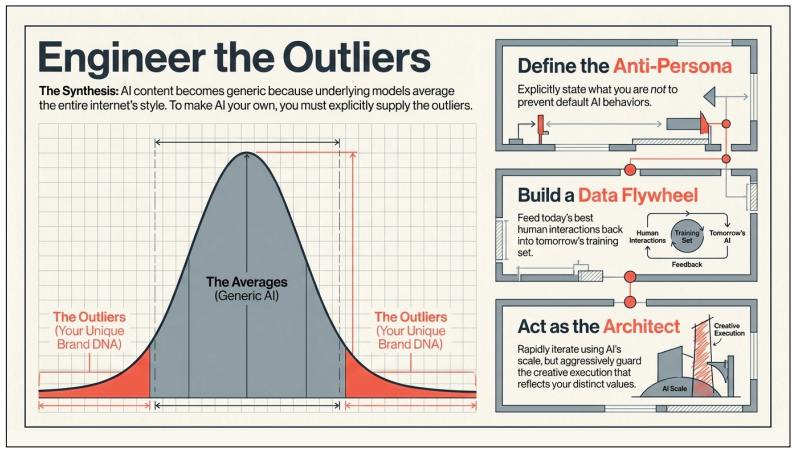
Engineer the Outliers
This is what Amrei calls algorithmic mediocrity or the tendency for AI-generated content to converge toward statistically average outputs when it lacks sufficient organizational context, expertise, or creative direction. It's a systems problem, not a tool problem.
During the session, Amrei Dizon introduced the Brand Architecture Blueprint: a four-layer framework for ensuring AI-generated work remains aligned with an organization's identity, governance, language, and creative standards. Rather than relying on prompts alone, it embeds institutional knowledge into repeatable systems that scale.
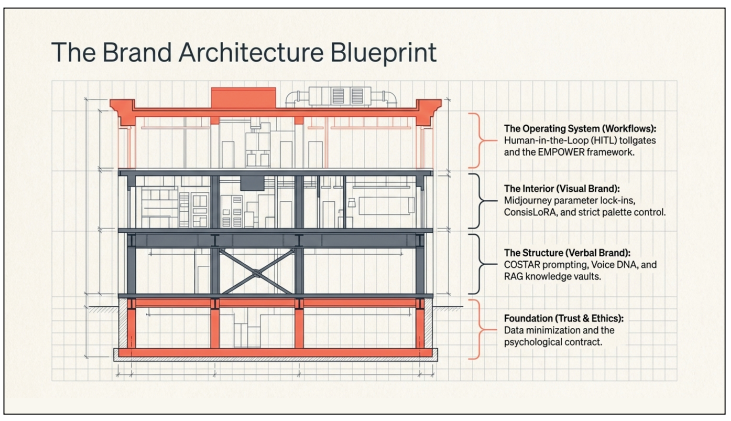
The Brand Architecture Blueprint
That architecture begins with trust and ethics, extends to verbal and visual identity, and is reinforced through workflows that keep outputs consistent over time.
The same principle applies to language. Organizations do not need to invent a brand voice for AI, they need to teach AI the voice they already have.
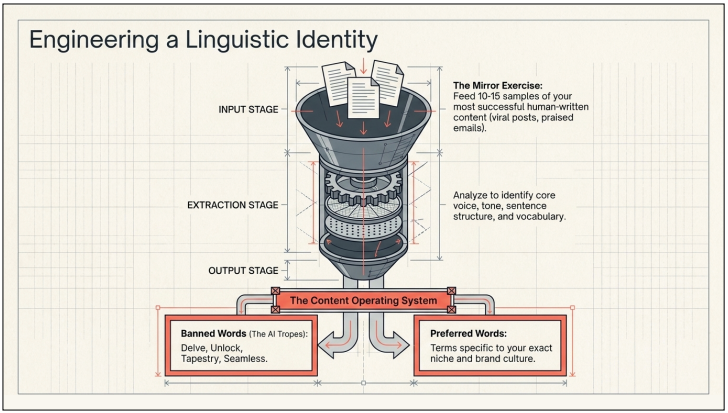
How to Engineer a Linguistic Identity
By grounding systems in real writing, institutional knowledge, customer understanding, and clear standards, organizations can create outputs that remain recognizably their own.
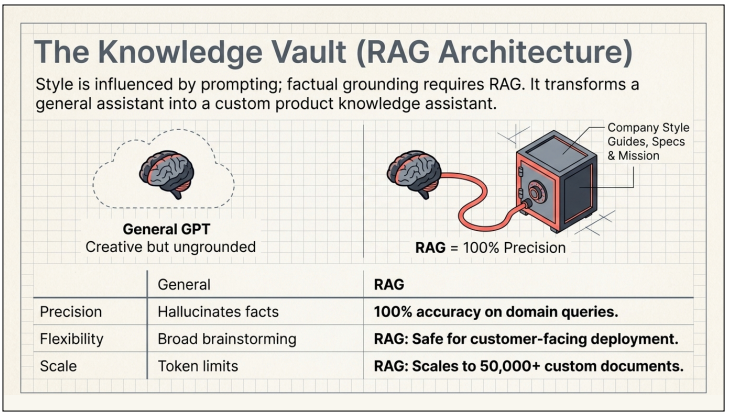
RAG Architecture
As Amrei noted, "AI reveals how generic you're willing to be."
The goal was never to make AI more creative. It's to supply the context, perspective, and judgment that make a brand distinctive in the first place.
How Should Organizations Structure AI Workflows?
If authenticity is architected, then workflows are what make it sustainable.
AI works best as part of a structured process. Human input is most valuable at the beginning and end: defining the problem, setting direction, making decisions, and ensuring the final output actually meets the standard. AI accelerates the middle: generating drafts, exploring options, moving fast.
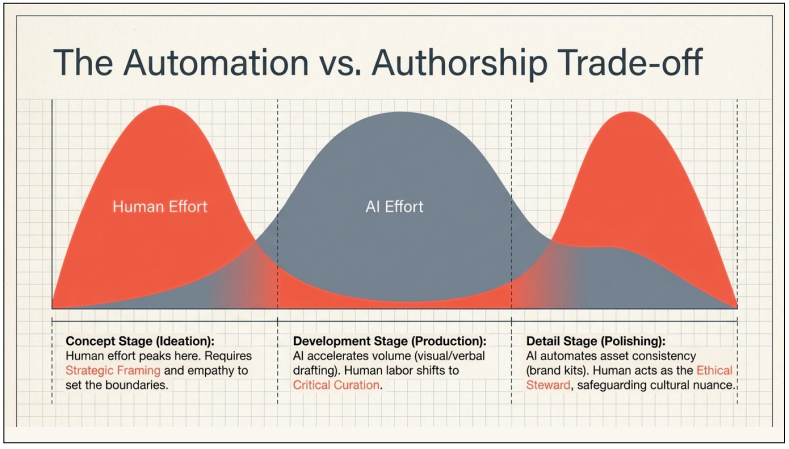
The Automation vs. Authorship Trade-off
One practical tool for structuring that middle stage is the CO-STAR framework:
Context: What background does the model need?
Objective: What should it accomplish?
Style: How should the response be expressed?
Tone: What attitude or emotional register should it carry?
Audience: Who is the work intended for?
Response: What format and level of detail are required?
The framework is credited to Singaporean data scientist Sheila Teo, who used the approach in winning GovTech Singapore’s first GPT-4 Prompt Engineering Competition. Subsequent research has also traced CO-STAR to Teo and GovTech Singapore’s Data Science and AI team.
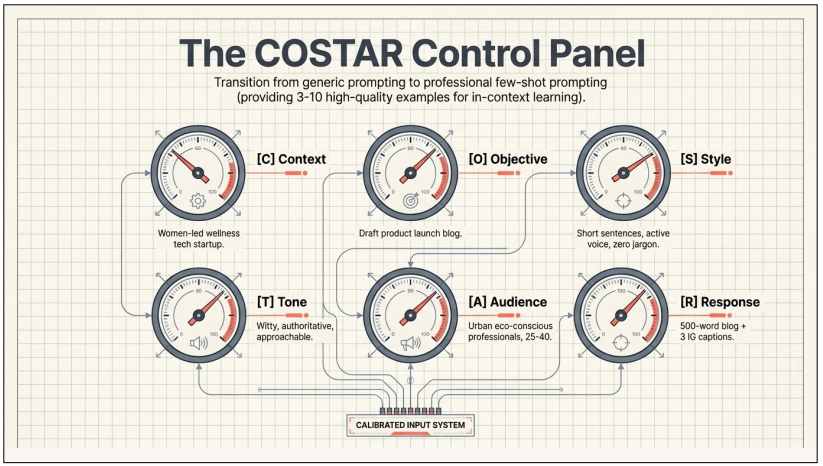
The COSTAR (Context, Objective, Style, Tone, Audience, Response) Panel
CO-STAR gives AI a more useful brief. But even a well-built prompt cannot replace judgment.
The competitive advantage still sits at both ends of the process: knowing what to ask for and knowing whether the answer is good enough.
As Amrei summarized: "AI drafts. Humans approve. Then it ships."
The strongest organizations are designing better systems where human expertise and AI capability work together with human checkpoints built in as a non-negotiable, not an afterthought.
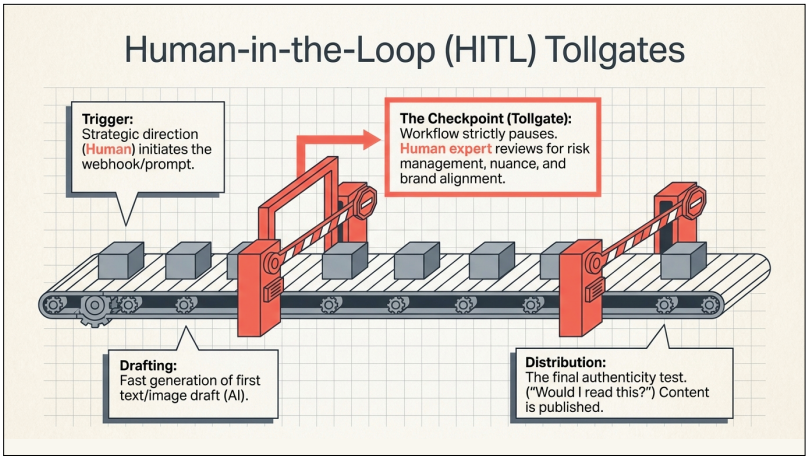
Human-in-the-Loop (HITL) Tollgates
How Can Organizations Start Using AI Without Losing Their Brand Identity?
Getting started doesn't require a full transformation. It begins with a few foundational practices:
Establish Boundary Conditions
Define the standards AI should operate within. This includes brand voice, visual guidelines, business objectives, and ethical considerations. Clear boundaries create more consistent outputs.
Direct AI Using your Domain Expertise
Treat AI as a collaborator rather than a replacement. The strongest results come from combining human judgment, creativity, and expertise with AI's speed and scale.
Treat Prompting as Design
A prompt is more than an instruction. It is a creative brief. The more context, direction, and specificity provided, the more useful the output becomes. Refine and iterate rather than settling for the first response.
Validate Faster
Use AI to accelerate learning, not just production. Generate ideas quickly, gather feedback sooner, and use those insights to improve work before significant time and resources are invested.
The Real Competitive Advantage
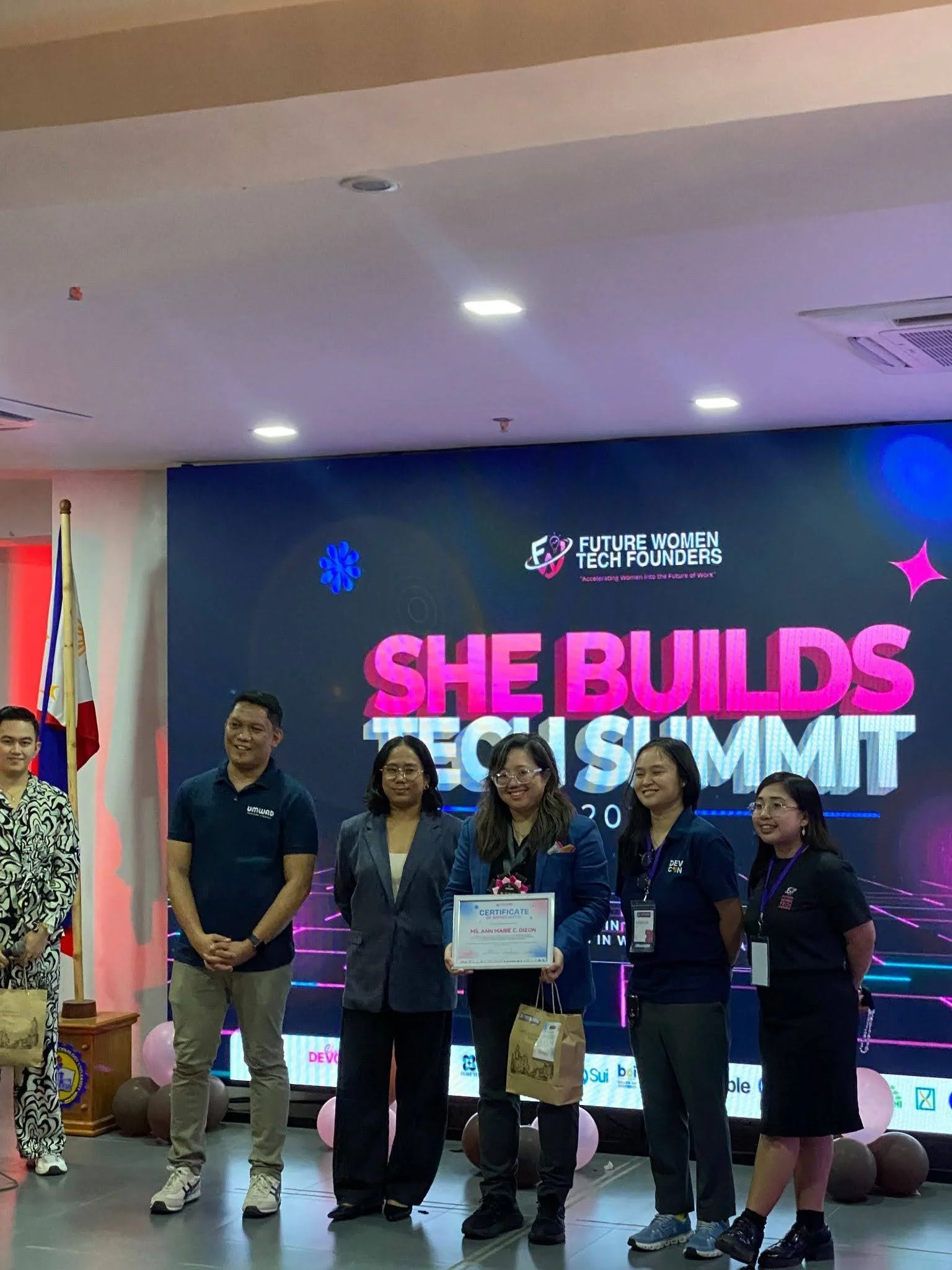
Amrei Dizon receives a certificate of appreciation after her summit session.
As AI becomes more powerful and more accessible, the tools themselves stop being the differentiator. Everyone will have access to the same platforms, the same models, the same capabilities.
What remains hard to replicate is judgment, perspective, culture and the ability to direct AI toward outcomes that actually matter to real people. These are the things that can't be prompted into existence. They have to be built, layer by layer, with intention.
The organizations that thrive will have the clearest direction. The brands that endure will be the ones that knew what made them distinctive and built systems to protect it at scale.
That's what authenticity architecture looks like in practice. And the direction, ultimately, is yours to take.
Work with us:https://www.vitalstrats.ph/contact-us
Explore our vision:https://www.vitalstrats.ph/about-us
Follow the journey:
FB:https://www.facebook.com/vitalstrats/
LI:https://www.linkedin.com/company/vitalstrats-creative-solutions/
IG:https://www.instagram.com/vitalstrats/
X:https://x.com/Vitalstrats
YOU MAY ALSO LIKE


Vitalstrats Creative Solutions (VCS) is a creative agency based in Quezon City, Philippines. VCS specializes in content marketing, advertising, and video production. We use strategic creativity to help our clients grow their brands.
Facebook: https://www.facebook.com/vitalstrats
Instagram: https://www.instagram.com/vitalstrats
Twitter: https://twitter.com/Vitalstrats